
Last updated November 24, 2026
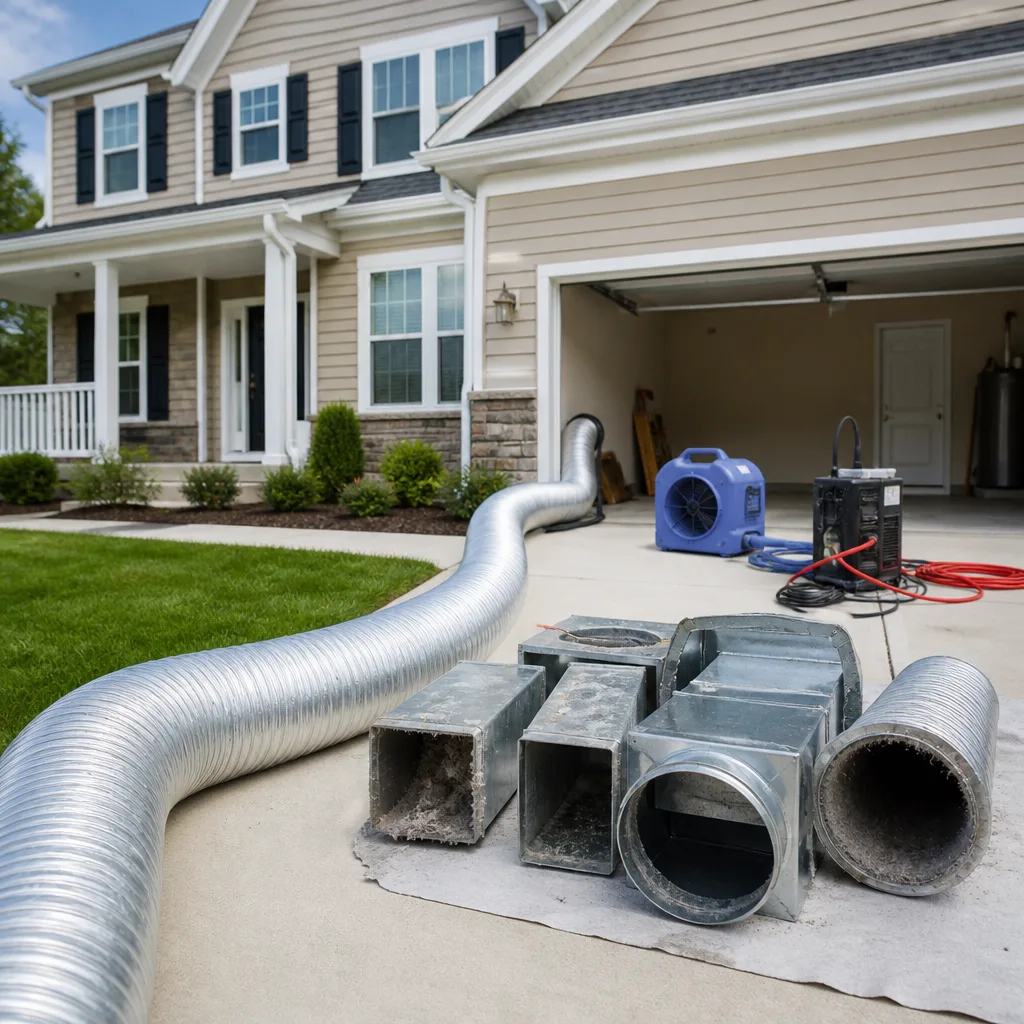 Whole-home duct cleaning
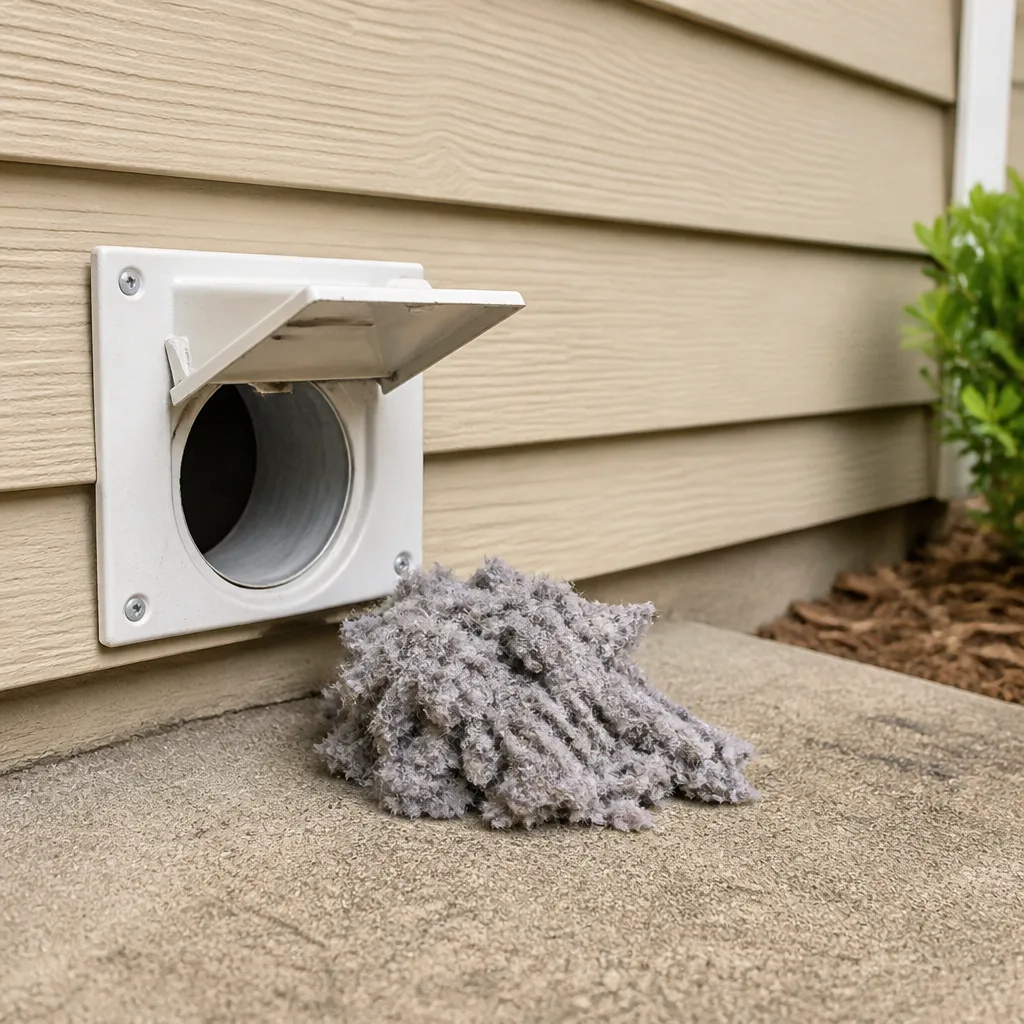 Dryer vent cleaning
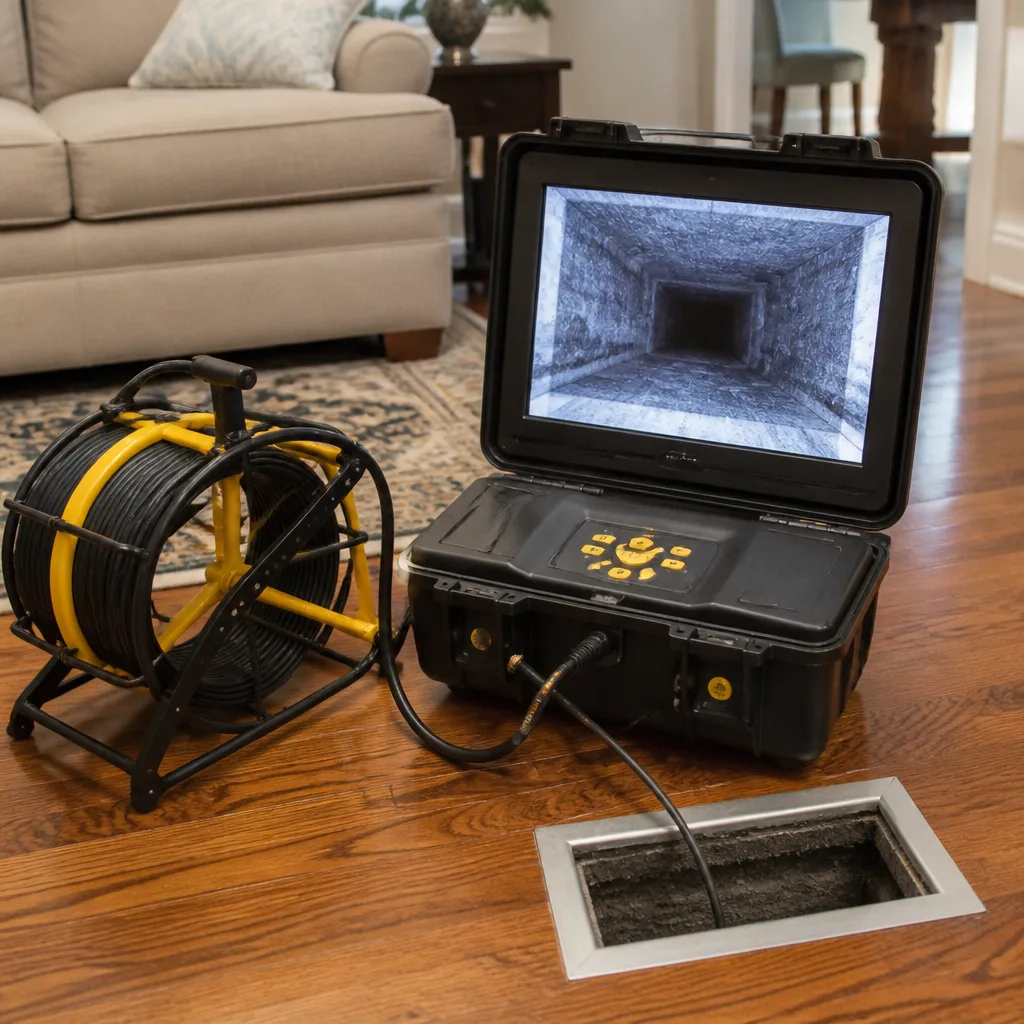 Camera inspection
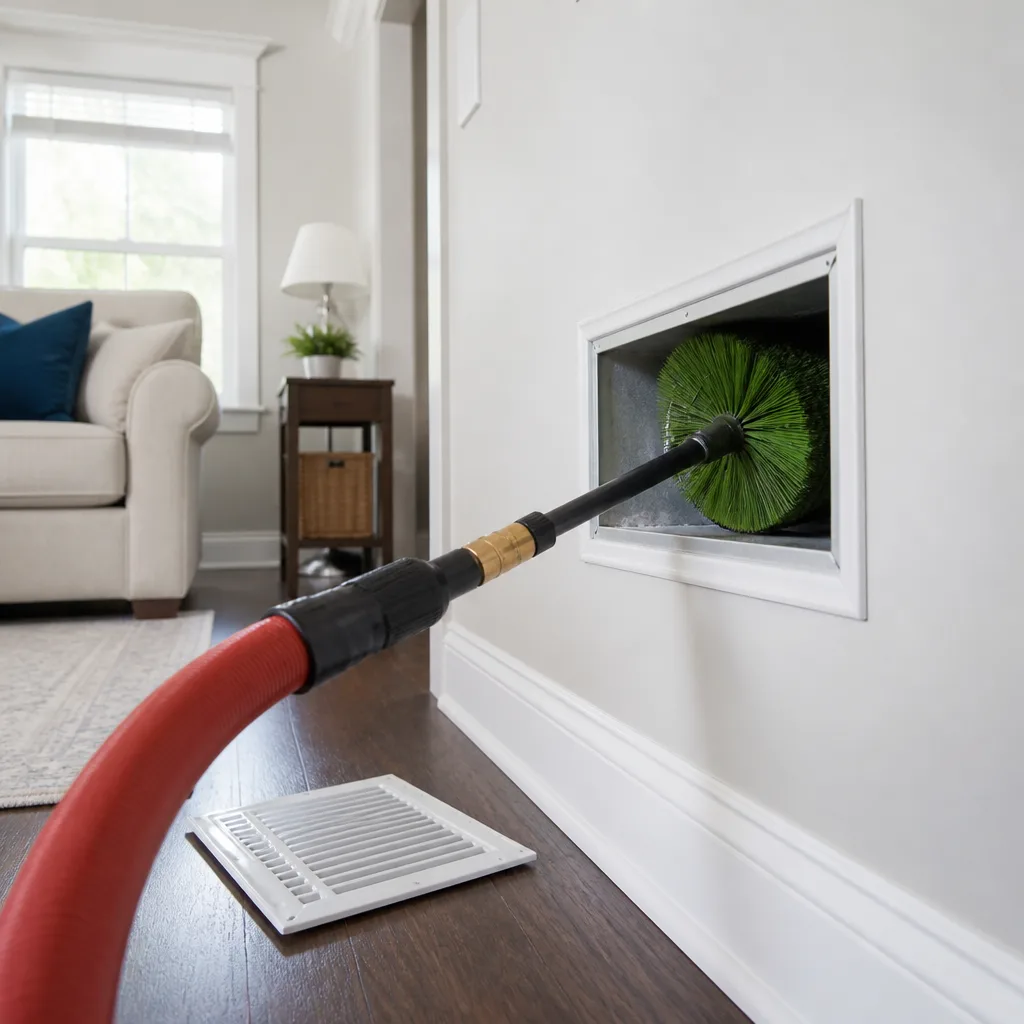 Sanitizing & deodorizing
Whole-system duct and dryer vent check with before-and-after photos - you see exactly what came out of your vents
That "$99 whole-house special" is a bait ad - the real number appears once they are in your hallway, or the "clean" is a shop-vac at the register. We photograph the inside of your ducts before and after instead.
Air Duct Cleaning Maintenance Checklist for Mariners Harbor Homeowners
The filter you change every 90 days catches what never made it into your ducts. What’s already past the filter is a different question, and most homeowners in Mariners Harbor have no system for tracking it. Ducts don’t clog on a schedule you can see. They load up slowly, season by season, and the first sign is usually a smell or a dust line you notice months after the buildup started. A written maintenance checklist fixes that. This guide gives you a month-by-month task list tuned to Staten Island’s seasonal pattern, a flashlight-and-phone inspection you can do without taking anything apart, filter ratings explained in plain terms, and a log you keep after a professional cleaning so future comparisons mean something.
Quick Answer
A homeowner air duct maintenance checklist in Mariners Harbor should cover four things: a quarterly filter swap with the MERV rating written on the calendar, a monthly flashlight-and-phone inspection of accessible registers, a seasonally timed professional cleaning (spring after heating season, and again after any renovation), and a written log of what you saw and when. Most ducts need professional cleaning every three to five years in a typical Staten Island home, sooner in homes with pets, recent renovations, or heavy dust. Between visits, your job is observation and documentation, not disassembly.
Styles & brands we work with
- Whole-home duct cleaning
- Dryer vent cleaning
- Camera inspection
- Sanitizing & deodorizing
Table of Contents
- Mariners Harbor’s Seasonal Duct Pattern: A Month-by-Month List
- How to Inspect Your Registers With a Flashlight and Phone
- Filter Ratings Explained: MERV 8 vs MERV 11 vs MERV 13
- What to Log After a Professional Cleaning
- Early Indicators That You Should Move Up Your Cleaning Schedule
- Post-Renovation Fallout and What It Means for Your Ducts
- A Note for Property Managers With Multiple Units
Mariners Harbor’s Seasonal Duct Pattern: A Month-by-Month List
Mariners Harbor sits on Staten Island’s west shore, and the local weather pattern shapes when duct problems show up. Winters run cold and the heating system runs hard for months, pulling a steady stream of dust-laden air through the return side. Spring arrives wet, and the cold return air meeting warmer interior humidity creates the conditions where mold and mustiness get a foothold. Summer pushes warm, humid outside air into basements, crawlspaces and adjoining spaces that share ductwork with the living area. Fall is the reset window. Here’s how we’d structure a year of homeowner action around that pattern.
January through March (heating season): Change the filter every 60 days instead of 90 if the system runs daily. Watch the return register for dust accumulation on the grille bars. Note any musty smell coming from supply registers when the heat first kicks on in the morning.
April through June (spring reset): This is the best window for a professional cleaning. Heating season has deposited what it’s going to deposit, and the mold risk is highest right after the system stops running continuously. Check the return plenum for white or greenish spots. Take photos before and after any cleaning so you have a reference.
July through September (humidity season): Watch for condensation on supply grilles, especially in rooms over a basement or crawlspace. If you notice a damp smell after a stretch of humid days, that’s worth logging. Filter changes may need to go back to 60-day intervals if a window unit or dehumidifier runs nearby.
October through December (reset): One more filter change before heating season, a full visual inspection of every accessible register, and a review of the log to decide whether the next cleaning window is spring or later.
If you’d rather hand this entire annual cycle to a specialist who knows how these seasons behave locally, our Air Duct Cleaning Mariners Harbor page explains how we approach it.
How to Inspect Your Registers With a Flashlight and Phone
You don’t need to remove grilles or take anything apart to get real information about duct condition. A flashlight and your phone camera are enough, and the photos give you something to compare against later. Here’s the process we use as a starting point, adapted for homeowner use.
- Pick a bright flashlight, not a phone light. Phone lights are diffuse and white-cast, which hides dust buildup on the duct interior. A focused LED beam shows you the surface texture inside the register throat.
- Start with the supply registers you can reach comfortably – floor registers first, then wall registers. Don’t force anything. If a grille is painted shut or screwed down, leave it and inspect the ones that lift out easily.
- Look at the visible interior surface, not the grille. The grille bars collect dust evenly. What matters is whether the duct throat behind the grille shows a uniform grey film, patchy dark streaks, or debris resting at the bottom edge of a horizontal run.
- Photograph each register with a fixed reference point. Tape a small piece of masking tape on the wall beside each register and write a number on it. That way your photo from March and your photo from September line up, and you’re not guessing which register was which.
- Photograph the return registers separately. Returns carry most of the air volume in a typical home, so they load up faster. If the return filter is grimy within a few weeks of a change, that’s a signal.
- Record the date, the register number, and one descriptive line in a notes app or notebook. That’s the whole process. It takes ten minutes for a typical single-family home in Mariners Harbor.
What you’re looking for: uniform grey film suggests normal accumulation. Dark or rusty streaks suggest moisture. Visible debris resting at the bottom edge of a horizontal run suggests the duct hasn’t been cleaned recently, or that return-side air is pulling from a dirty source. Patchy white or greenish spots mean stop and call a professional. That’s a possible mold situation, and it needs to be assessed on site rather than logged and forgotten.
For homes with hard-to-reach runs, especially in older Staten Island housing stock where the basement is where the main duct trunk runs, professional inspection with camera equipment is worth the visit. Our full air duct cleaning service includes this inspection as a starting point.
Filter Ratings Explained: MERV 8 vs MERV 11 vs MERV 13
MERV is the rating that tells you what a filter catches. Higher isn’t universally better. Each step up catches more particles but restricts airflow more, and the tradeoff affects how fast your ducts accumulate dust. Here’s how the three common ratings break down for a typical Staten Island home.
- MERV 8: Catches pollen, dust mites, mold spores and most larger particles. It’s the rating most residential systems are designed around, and it’s the lowest restriction on the blower. If your system was installed any time before the 2010s and no one has upgraded the filter, this is likely what it was specced for.
- MERV 11: Catches fine particles down to around one micron, including smoke, finer dust and some bacteria. Restriction goes up modestly. On most modern residential systems it’s a reasonable pairing with an existing filtration cabinet. If you’ve had an Aprilaire or Honeywell filter cabinet installed, the cabinet itself usually specifies a compatible MERV range.
- MERV 13: Catches the smallest particles in the residential range, including virus carriers and fine smoke. The restriction is real, and a system not designed for it can lose airflow, run longer cycles, and in some cases ice up the evaporator coil during summer. Only step up to MERV 13 if the system’s documentation says it’s supported.
What does this mean for duct accumulation? A tighter filter catches more at the filter, which means less gets into the ducts and the accumulation rate slows. That’s the good news. The tradeoff is that a tight filter with a restricted blower can cause your system to pull air from gaps in the ductwork, and that’s where unfiltered dust enters. If you upgrade to MERV 13, the sealing around your duct joints matters more, not less.
If you’re not sure which rating your system supports, the manufacturer’s documentation for the air handler is the answer, not a guess. And if you’re planning to move to a higher-MERV filter while your ducts are already loaded with dust, clean the ducts first. Otherwise you’re putting a finer screen in front of a dirty system.
What to Log After a Professional Cleaning
The date of your last cleaning is the least useful piece of information in your maintenance log. Anyone can write “cleaned 2025.” What you need for a meaningful baseline is a set of observations that lets you compare the state of your system over time. Here’s what we’d suggest writing down, and what we track on a typical job.
- The date, plus the season. “Spring 2026” tells you more than “March 2026” because it ties to the seasonal pattern described above.
- What was cleaned. Supply runs, return runs, main trunk, branch lines, or some combination. The scope matters more than the label, and a good report should be explicit.
- The condition observed at cleaning. Light dust, moderate accumulation, heavy accumulation, or visible debris. If the technician noted anything unusual – a disconnected joint, a crushed run, an obvious bypass – write it down.
- Before-and-after photos. Ask for photos of your own ducts, not stock images. Our crews use equipment that lets us capture register-level before-and-after shots as part of the job, because you should be able to see what was actually removed.
- Filter rating used and the date installed. This sets the interval for the next change.
- Any sanitizing or protective treatment applied. If you opted for air quality and sanitizing service using Guardsman-grade protective treatment or an Aprilaire or Honeywell compatible product, note the product and the date. Future technicians need to know what’s on the duct surface.
- The equipment used. Rotobrush rotary brush agitation and Nikro extraction systems leave the duct in a specific condition. If a future contractor uses different equipment, this context matters.
Log the observations in the same notes app you use for the register photos. Twenty lines of text per cleaning is enough. In our experience, the homeowners who get the most out of a professional visit are the ones who can tell the technician what’s changed since the last one.
Early Indicators That You Should Move Up Your Cleaning Schedule
Some duct problems announce themselves. Others only show up in patterns you’d have to be watching for. Here are the four we’d tell a Mariners Harbor homeowner to track, and what each one usually means.
- Musty odor timing. If the smell appears in the first 30 seconds after the heat kicks on in the morning, that’s residual humidity in the supply trunk that dries out once the system runs. If it appears consistently across the day, it’s more likely a source issue inside the ducts and worth a professional look.
- Allergy symptom patterns. If someone in the household consistently notices symptoms in a specific room, or specifically when the system runs, that’s worth logging with a date and a room. The pattern, not the symptom, is the diagnostic signal. Don’t guess at the cause, and don’t self-diagnose, but do write it down.
- Dust reappearance rate on horizontal surfaces. Wipe a shelf or TV top clean, photograph it, and check it again in a week. If the dust film is back in three days across multiple rooms, the ducts are likely contributing. If it’s only in one room, the issue is more likely local.
- Filter loading speed. If a filter that used to last 90 days is showing loading at 30, something upstream has changed. Log the exact date of installation and the date you observe loading.
Any one of these on its own is a reason to watch. Two together is a reason to schedule a professional visit. Three or more together is a reason to move up your cleaning schedule regardless of when the last one was. In our experience, most homeowners who notice two of these together are surprised to find a problem that would have been easy to address months earlier. Logging the pattern gives you a case for a specific service call rather than a vague complaint.
Post-Renovation Fallout and What It Means for Your Ducts
Renovation dust is different from ordinary household dust. Drywall sanding produces fine gypsum particles that settle in every surface within the work area and get drawn into return registers as soon as HVAC runs. Sawdust from cutting blades behaves differently again. If you’ve had any work done – even a single-room renovation – the ducts in that side of the house are likely the dirtiest they’ve ever been, and no amount of standard filter changing will pull the accumulated material back out.
The right sequence after a renovation:
- Keep HVAC off during heavy sanding and cutting. If you can’t, tape off return registers in the work area with painter’s tape and a plastic sheet. It’s a temporary fix and won’t stop everything, but it will reduce the load.
- Change the filter immediately when the work ends. Not “in a couple of weeks.” Immediately. That filter is now full of gypsum and sawdust.
- Book a professional cleaning within the first month. The longer renovation dust sits in the ducts, the more time it has to combine with seasonal humidity and set on the duct surface. Spring renovations should be cleaned before the summer humidity arrives.
- Ask about duct sealing at the same visit. The same renovation that loaded the ducts may have disturbed existing connections and joints. Having cleaning and sealing under one crew visit means the ducts go back to a known condition rather than getting cleaned and then leaking again.
Our HVAC cleaning scope covers both the air handler-side components and the ductwork. The Abatement Technologies air filtration equipment we deploy on-site is there for exactly this reason: it captures dislodged particulates during the job rather than recirculating them into the rooms you just renovated.
A Note for Property Managers With Multiple Units
If you manage multiple units in Mariners Harbor, the checklist above applies per-unit, but the scheduling logic changes. Rotating units through a cleaning window based on seasonal pattern is efficient when you have a shared calendar. Assign each unit to a spring window or a fall window and don’t move them without a reason. Filters are the cheapest schedule anchor you have, and a filter change scheduled at the same time as a cleaning visit means fewer site trips and less disruption for tenants.
Keep the same log structure per unit: date, scope, condition, photos, filter rating. When you’re comparing, say, three units of similar size in the same building, the log tells you which unit is loading faster than the others. That’s a subtle signal that could point to a leak, a disconnected run, or a return-side problem in that specific unit. Catching it early is cheaper than fixing it after the whole trunk is compromised.
For whole-building or multi-unit work, the scope we can offer under one crew visit – cleaning, repair, sealing, sanitizing – keeps the vendors down to one. That matters more in a multi-unit property than it does for a single home. If your dryer vents are on a shared schedule too, our dryer vent cleaning service runs under the same crew, which means the fire-risk category most duct cleaners deprioritize doesn’t get deferred indefinitely on your properties.
Common Mistakes to Avoid
- Counting on the date of the last cleaning instead of the observations from the last cleaning. A date without a scope note tells you nothing about whether the ducts were actually cleaned, or what condition they were in. Start logging observations from the first cleaning you book and the date stops being the most important line.
- Stepping up to MERV 13 without checking the air handler spec. In older Staten Island homes, the air handler is usually sized for a MERV 8 filter. MERV 13 on a system not designed for it can strain the blower and, over time, cause more duct leakage than the filter saves in particle capture. Check the spec first.
- Cleaning the ducts before the renovation, not after. It’s a common instinct to “do the ducts” while the walls are open. The right sequence is the opposite. Clean after the dust settles, and seal the joints the renovation disturbed at the same time.
- Skipping the return side. Most homeowner attention goes to the supply registers on the floor. In a Mariners Harbor home, the return trunk carries the most air and is usually the dirtiest run. If your inspection stops at the supplies, you’re only seeing half the system.
- Not asking for before-and-after photos of your own ducts. A verbal report of “looks good” is worth very little. Ask for photos of the actual runs in your home, taken at the register and at any accessible access point, so you have something to compare against the next inspection.
- Treating dryer vent cleaning as optional. The dryer vent is the highest fire-risk category in the home, and it accumulates lint at a rate independent of heating and cooling cycles. If it hasn’t been cleaned since before you moved in, schedule it now rather than bundling it with the next duct visit.
- Missing the post-heating mold risk window. April through June is when mold gets its chance in Mariners Harbor ductwork. If you spot white or greenish patches on a register throat in that window, don’t wait until fall. That’s a call-now situation, not a log-and-monitor situation.
See the difference
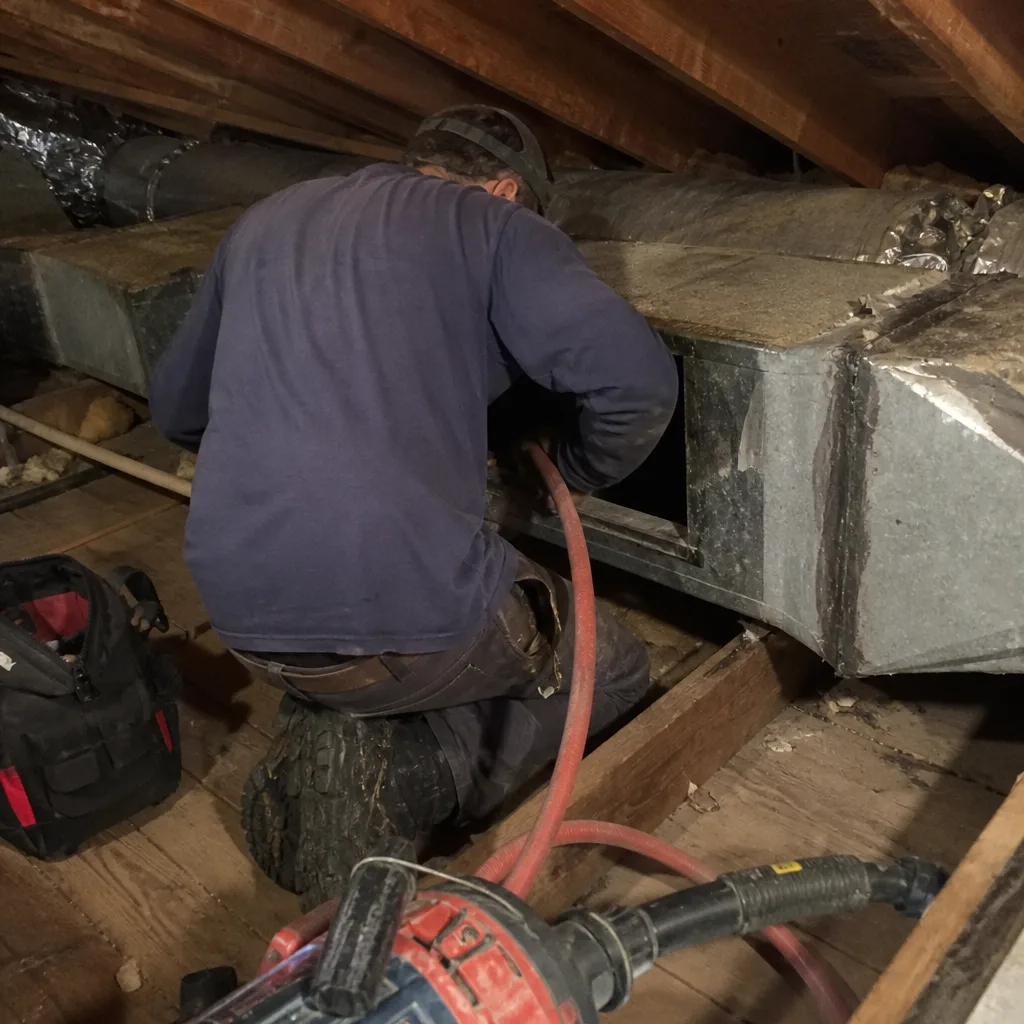 Before
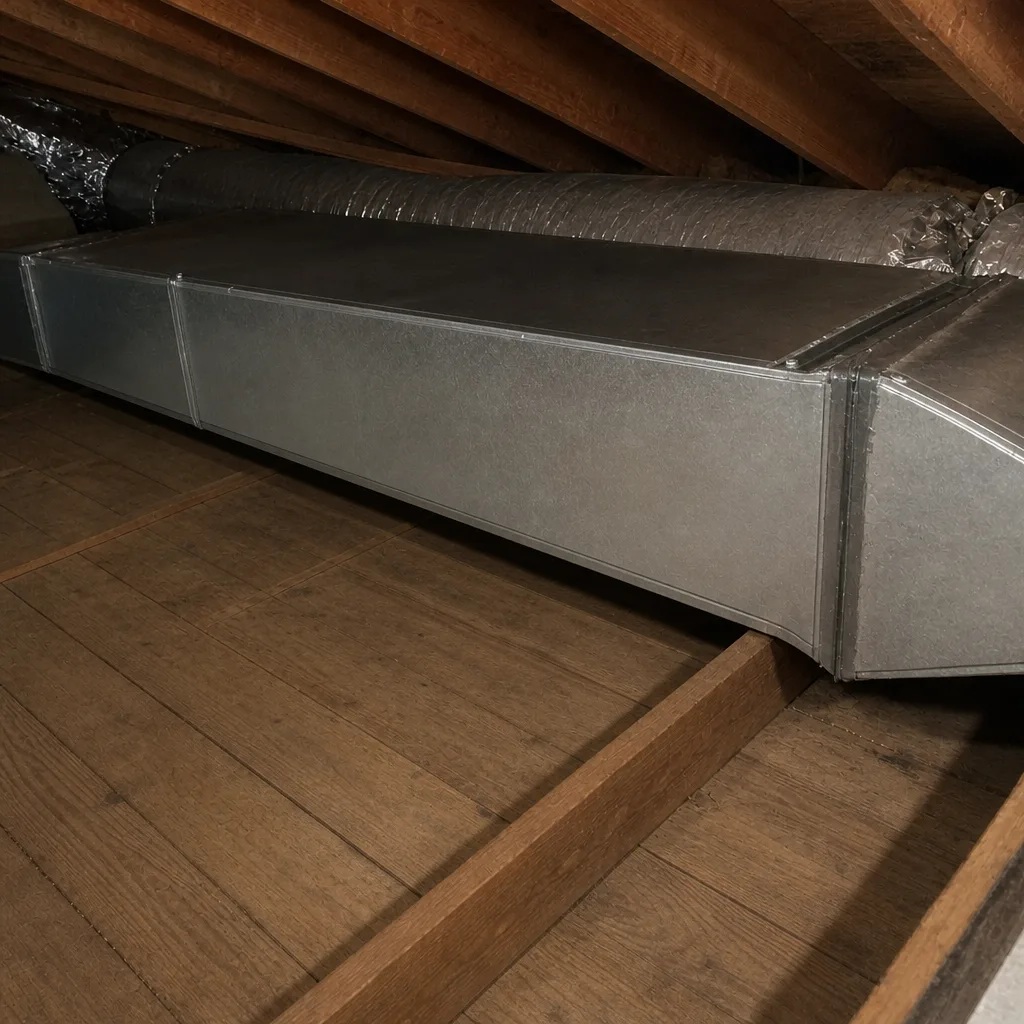 After
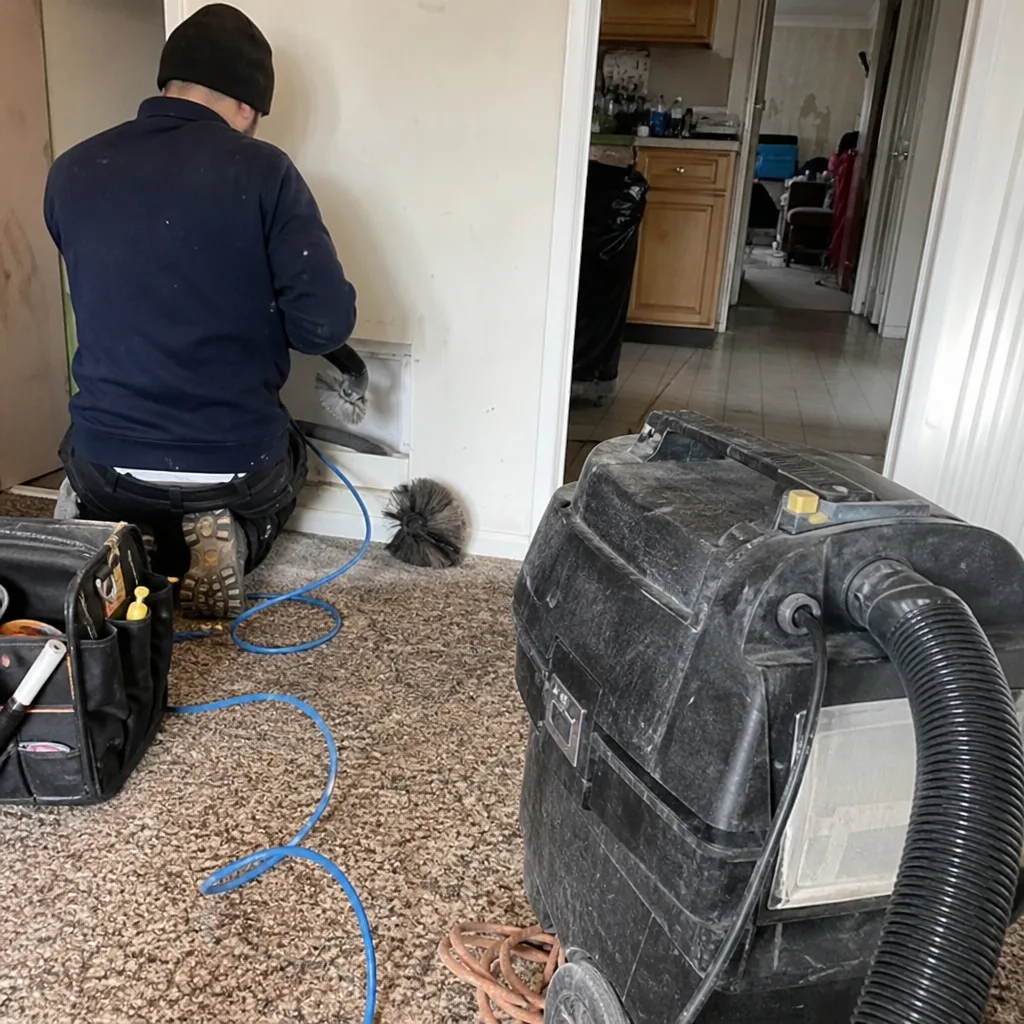 Before
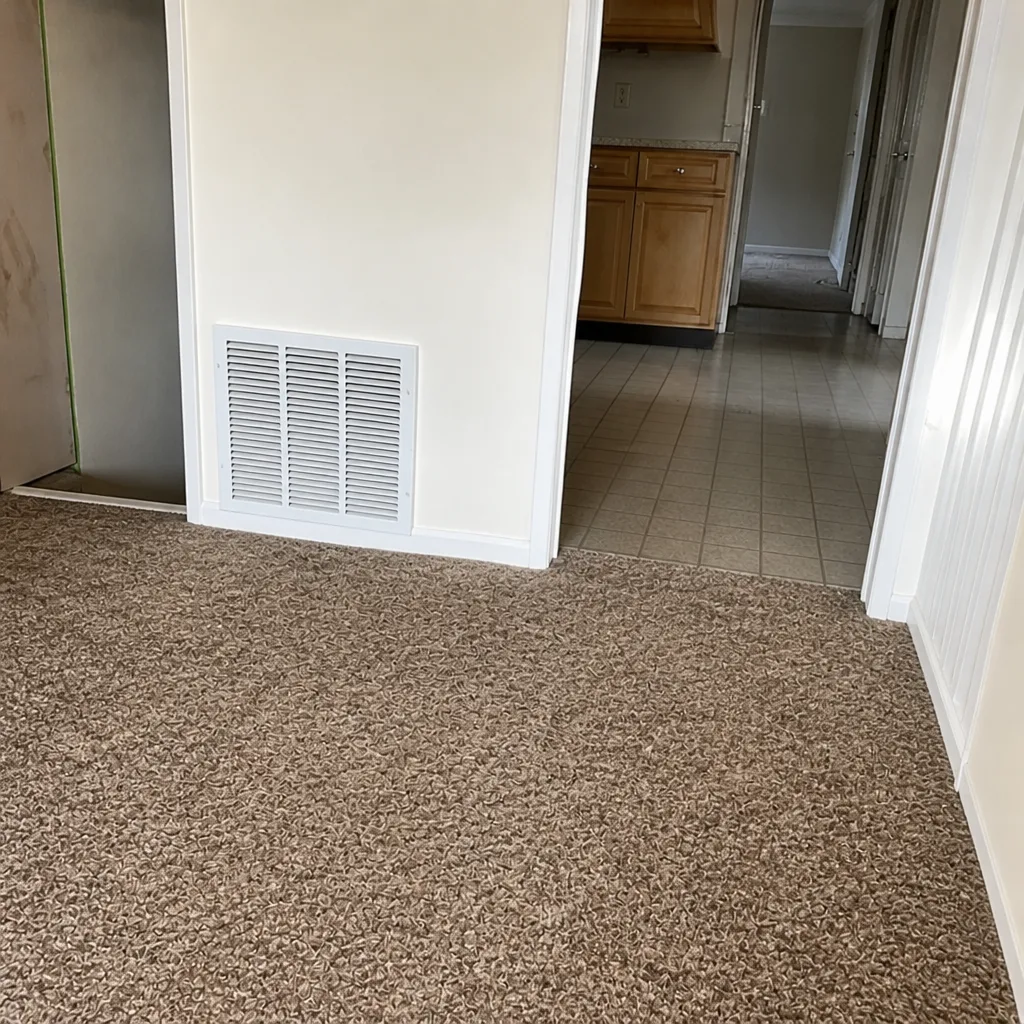 After
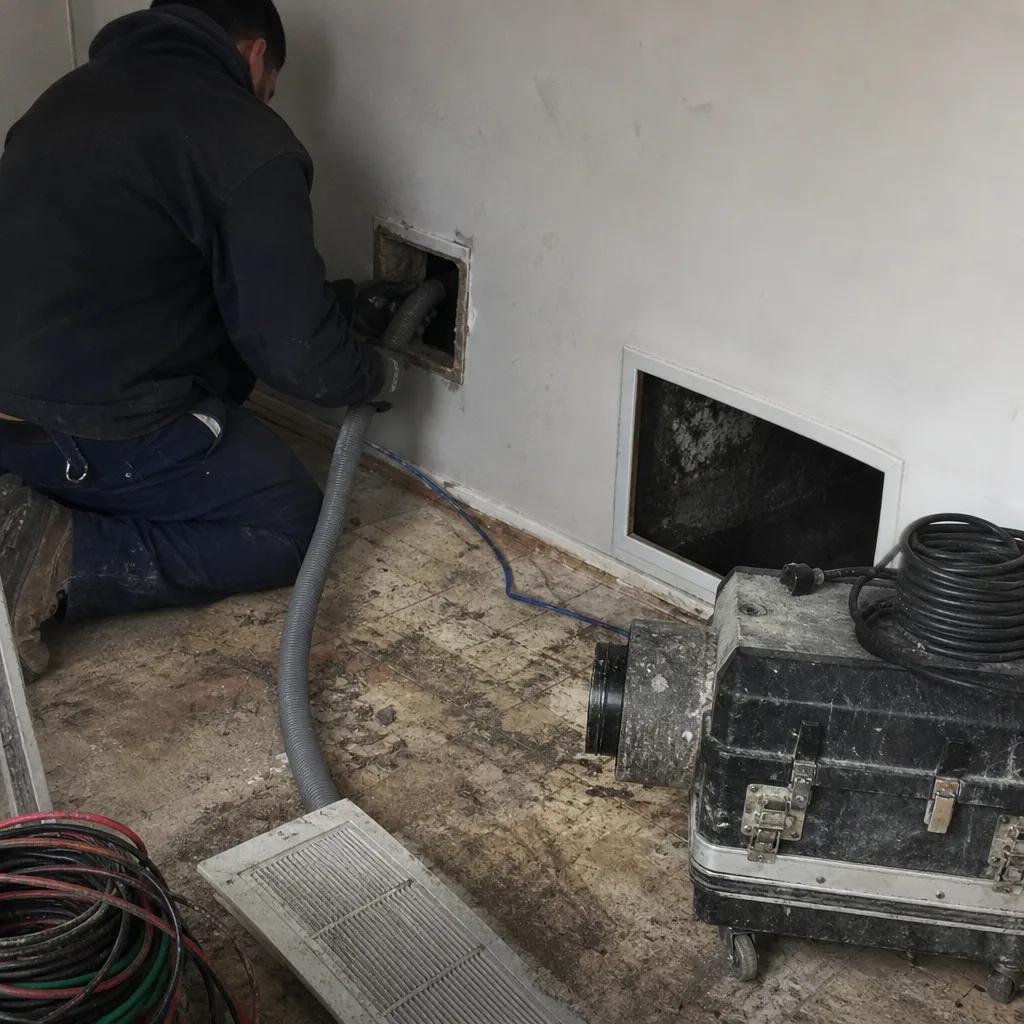 Before
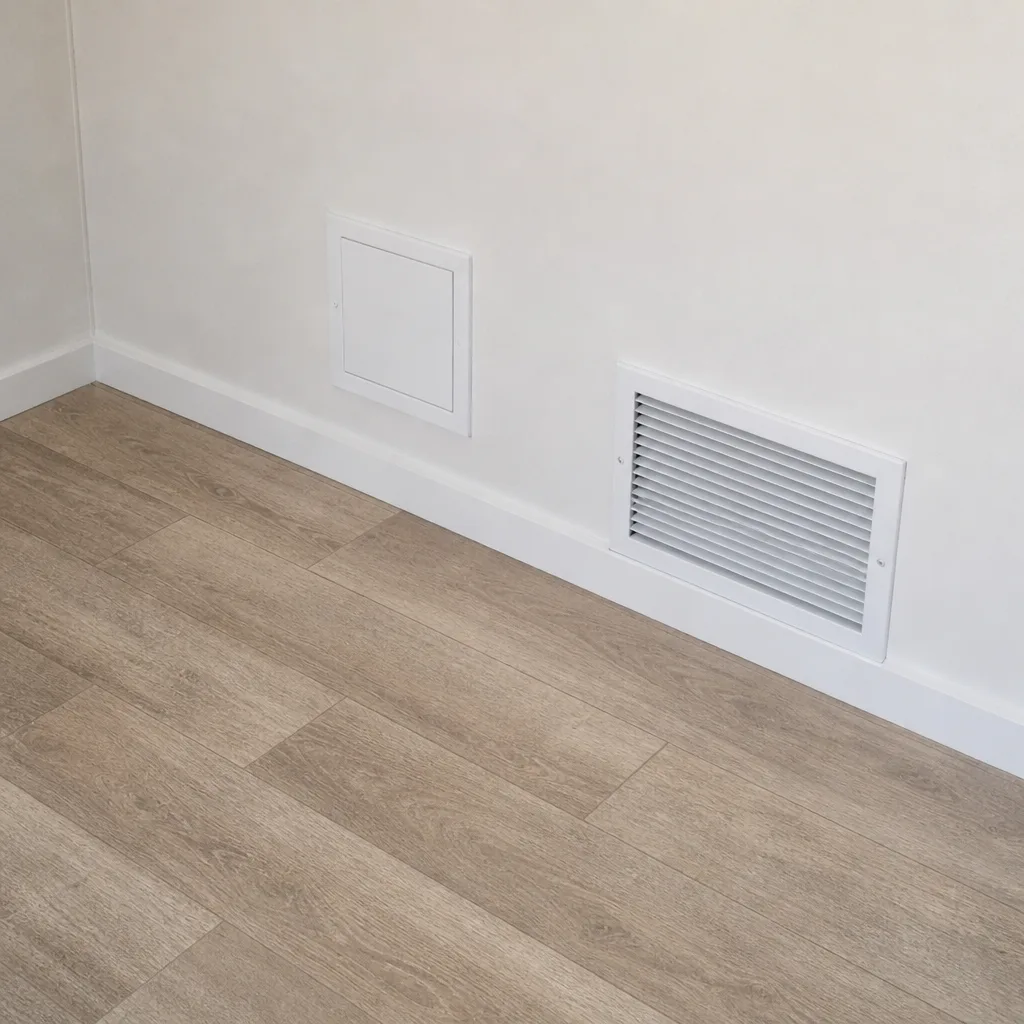 After
When to Call a Professional
Call a professional if you spot white or greenish patches inside a register throat, if two or more of the early indicators in this guide have shown up together, if you’ve recently finished a renovation, or if you’ve just moved into a home and don’t know when the ducts were last cleaned. Call if you see visible debris inside the duct runs but not the filter. Call if a filter loads faster than it used to. And call if you simply want a baseline – one professional cleaning with a written log and before-and-after photos is the starting point for every maintenance comparison you’ll do in the years afterward. Air Duct Cleaning Mariners Harbor offers free estimates in Mariners Harbor. Call (844) 625-7002. We answer 24/7. Fast dispatch from 7am to 7pm, Sunday through Friday.
Frequently Asked Questions
Every three to five years for most homes, sooner if you have pets, recent renovations, smokers, or more than three people in the household. The seasonal pattern in this guide is the reason a spring cleaning is often the right window: heating season deposits the material, and spring is when the system stops running continuously. Our technicians have up to 8 years of experience with the seasonal timing that works best here. Call (844) 625-7002 for a free estimate.
It’s worth it when the work is done to a verifiable standard, and not worth it when it’s sold as a coupon teaser. The industry problem is that a low advertised price often becomes a much larger invoice once the technician is on site. We avoid that by agreeing one flat price per system before work starts, with before-and-after photos of your own ducts as part of the job. If a quote is far below what the scope should cost, ask what’s actually included. Call (844) 625-7002 for an honest whole-system estimate.
Match the rating to the air handler spec, not to the marketing on the filter box. Most Staten Island residential systems are designed for MERV 8. Moving to MERV 11 is usually safe if your filter cabinet supports it. MERV 13 catches the finest particles but restricts airflow, and a system not designed for it can lose efficiency. If you’re planning to upgrade, clean the ducts first. Call (844) 625-7002 for a free estimate that includes a filter review.
After. Always after. Renovation dust – gypsum from drywall, sawdust from cuts – gets pulled into returns throughout the job. Cleaning before the renovation means the ducts refill within days of the work starting. The right sequence is: change the filter the day the work ends, book the cleaning within the first month, and ask about duct sealing at the same visit so disturbed joints are reset. Call (844) 625-7002 for a free estimate.
You can and should inspect your accessible registers with a flashlight and phone camera, and the six-step method in this guide is enough for that. What you can’t see without professional equipment is inside the main trunk and the runs behind walls. Use the homeowner inspection to build your log and to spot early indicators, and bring in a professional when the log shows a pattern, or every few years regardless. Call (844) 625-7002 for a free estimate.
Yes. Cleaning, repair, sealing, and sanitizing are handled under one crew visit. Dryer vent cleaning is available as a standalone service, and HVAC-side cleaning covers the air handler components that connect to the ducts. That means you don’t need to coordinate multiple vendors across the categories. The Abatement Technologies air filtration equipment we deploy on-site stays running during the job so dislodged particulates get captured rather than recirculated. Call (844) 625-7002 for a free estimate.
The Bottom Line
Duct maintenance is observation and logging more than it is action. Change the filter on a schedule you can prove from the calendar. Inspect the accessible registers quarterly with a flashlight and your phone. Write the observations down – the scope, the condition, the photos – because the date alone tells you nothing. Watch for the four early indicators, and move up the schedule when two or more show up together. Book a professional cleaning in spring after heating season or after a renovation, and keep the log as your baseline. And when in doubt, call. One flat price per system, agreed before work starts, with before-and-after photos of your own ducts, is the standard worth holding every contractor to. Call (844) 625-7002 for a free estimate. We answer 24/7. Fast dispatch from 7am to 7pm, Sunday through Friday.
Written by the team at Air Duct Cleaning Mariners Harbor.