
Last updated November 24, 2026
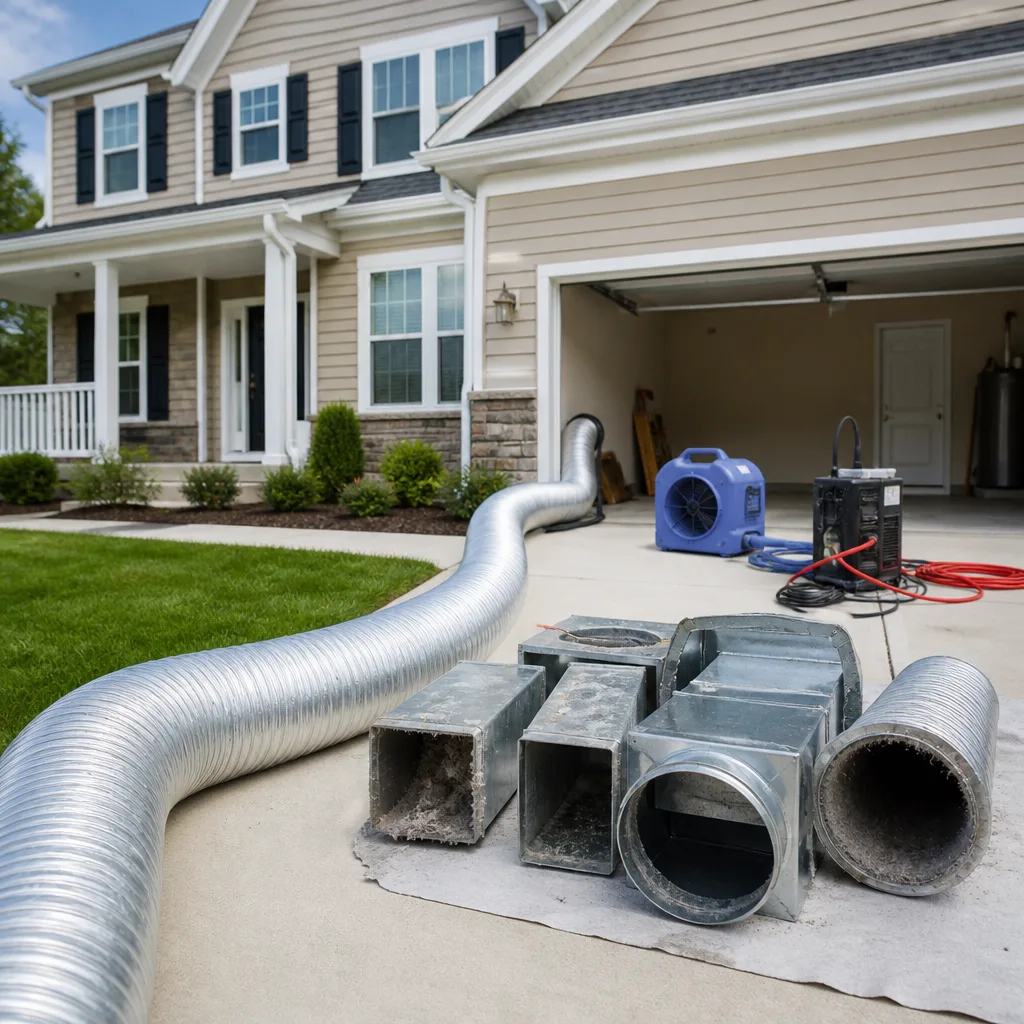 Whole-home duct cleaning
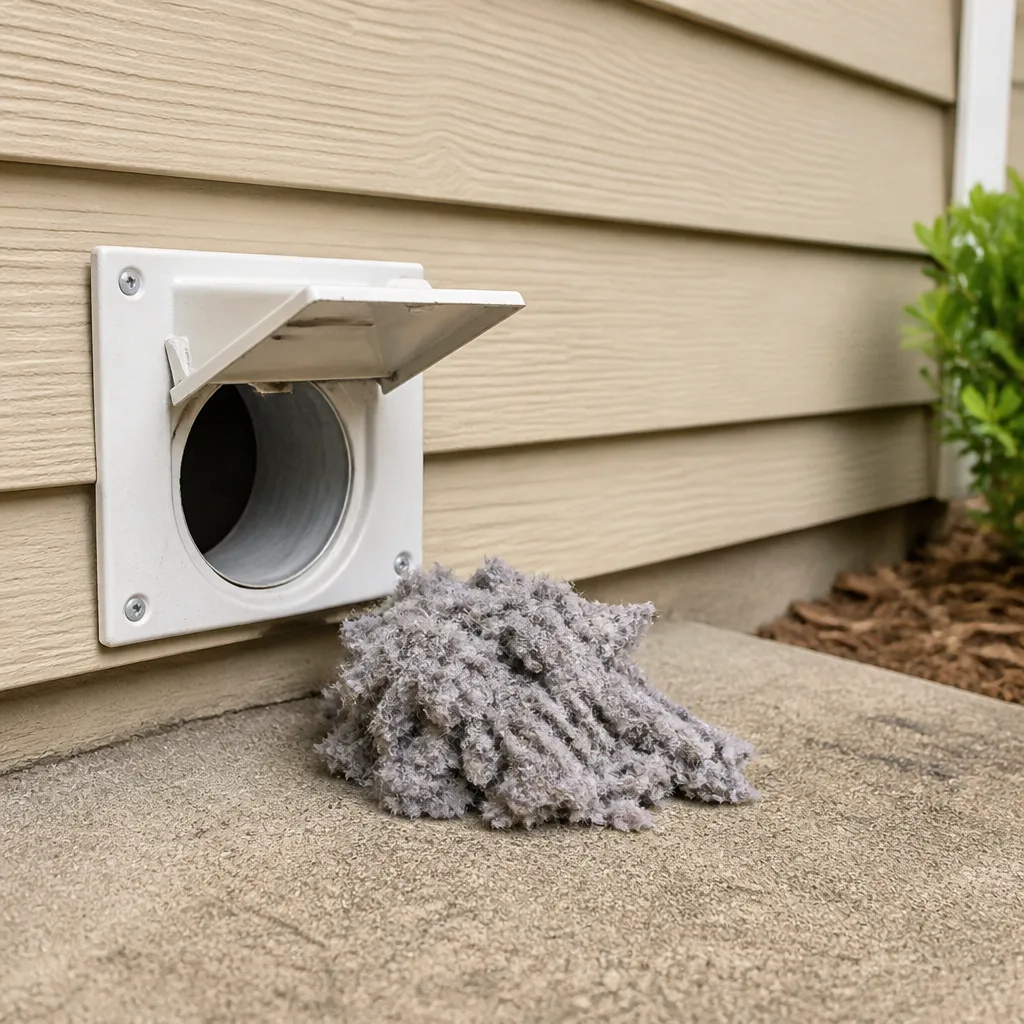 Dryer vent cleaning
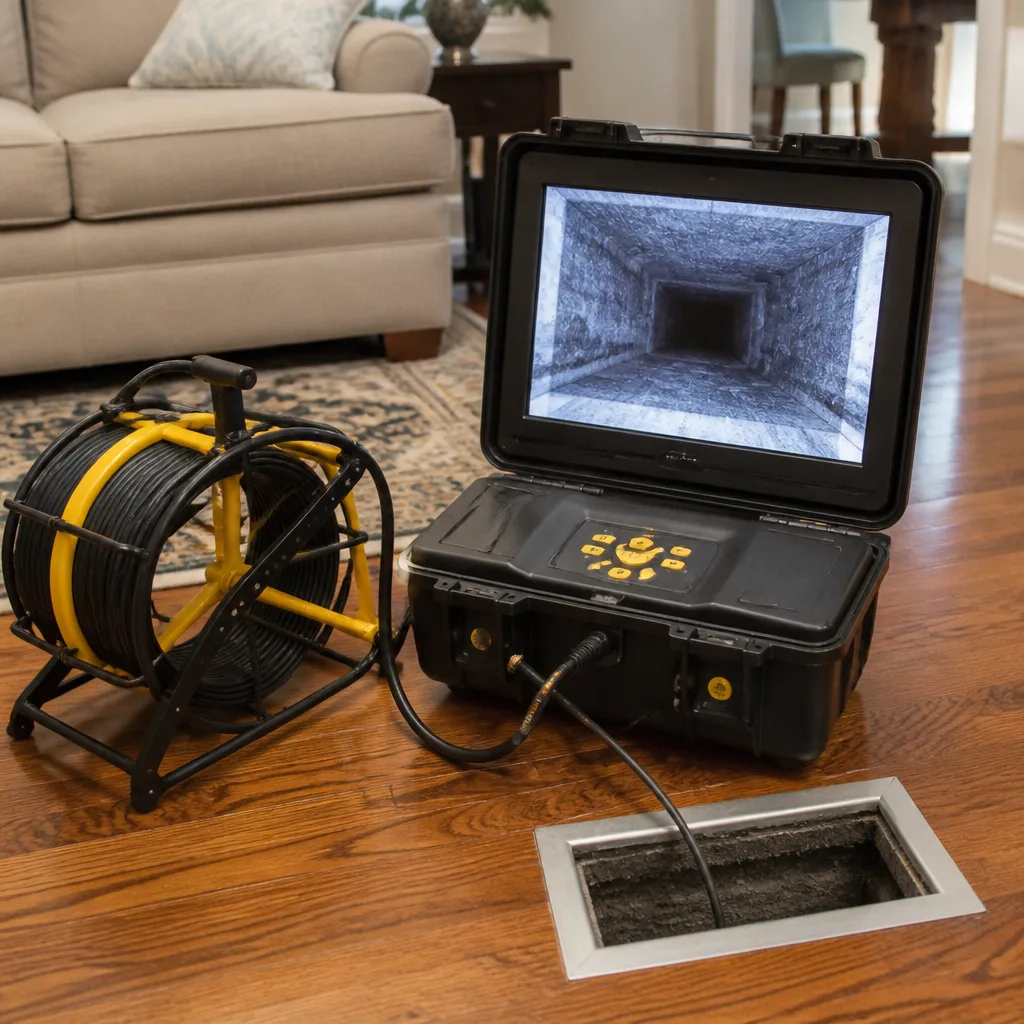 Camera inspection
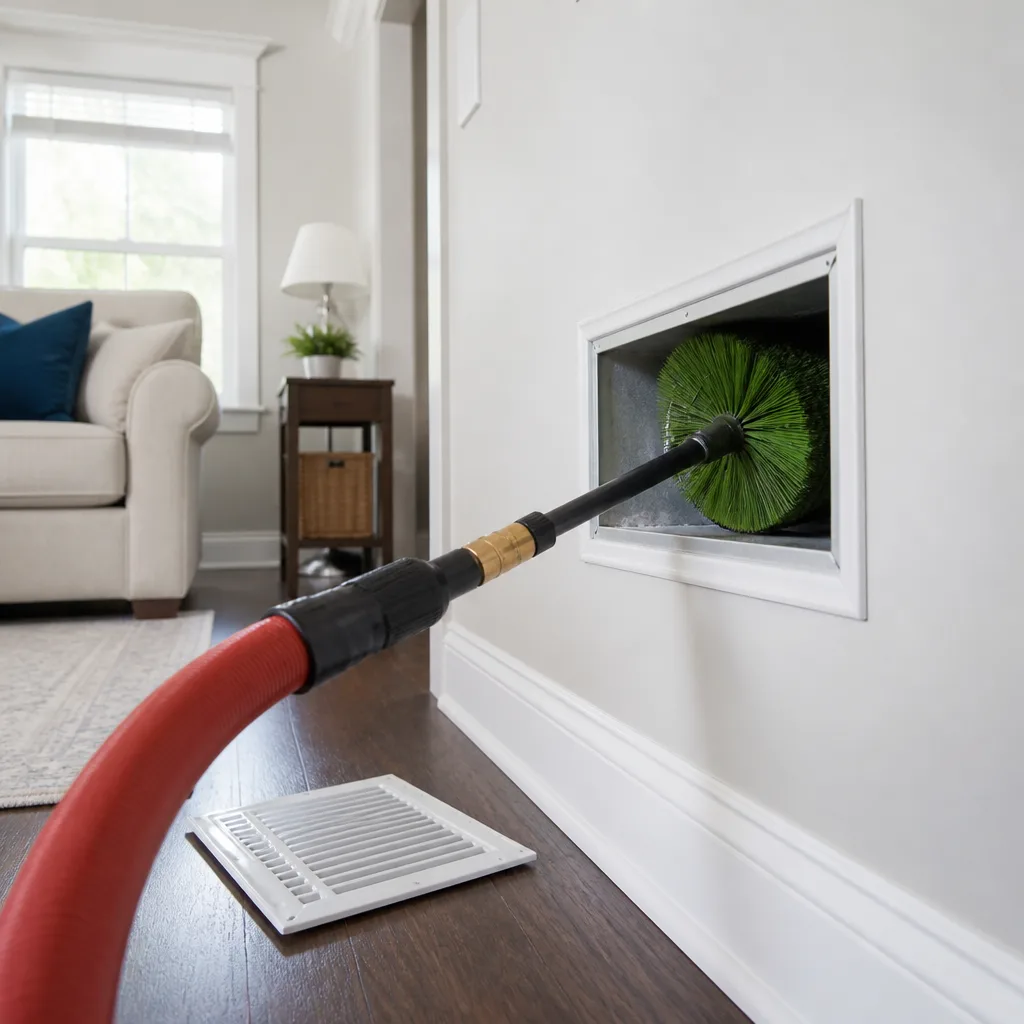 Sanitizing & deodorizing
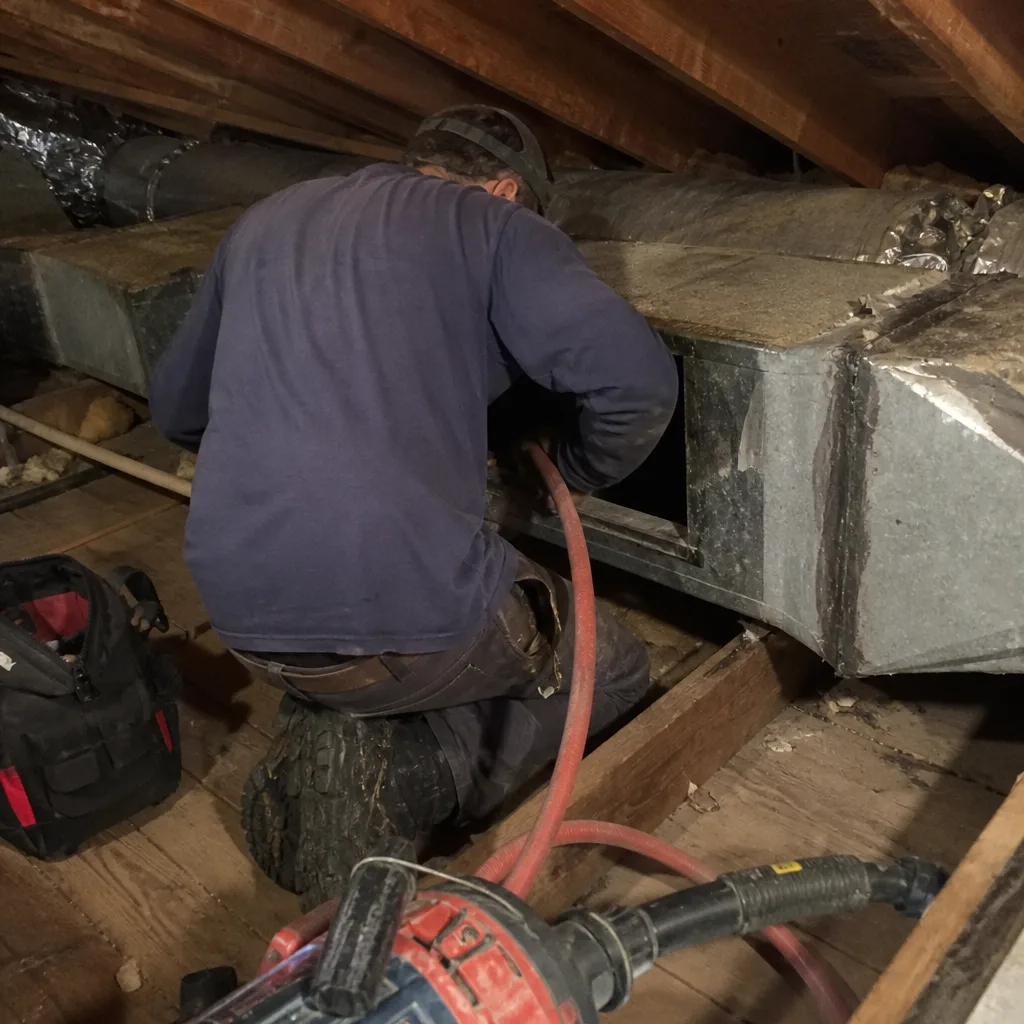
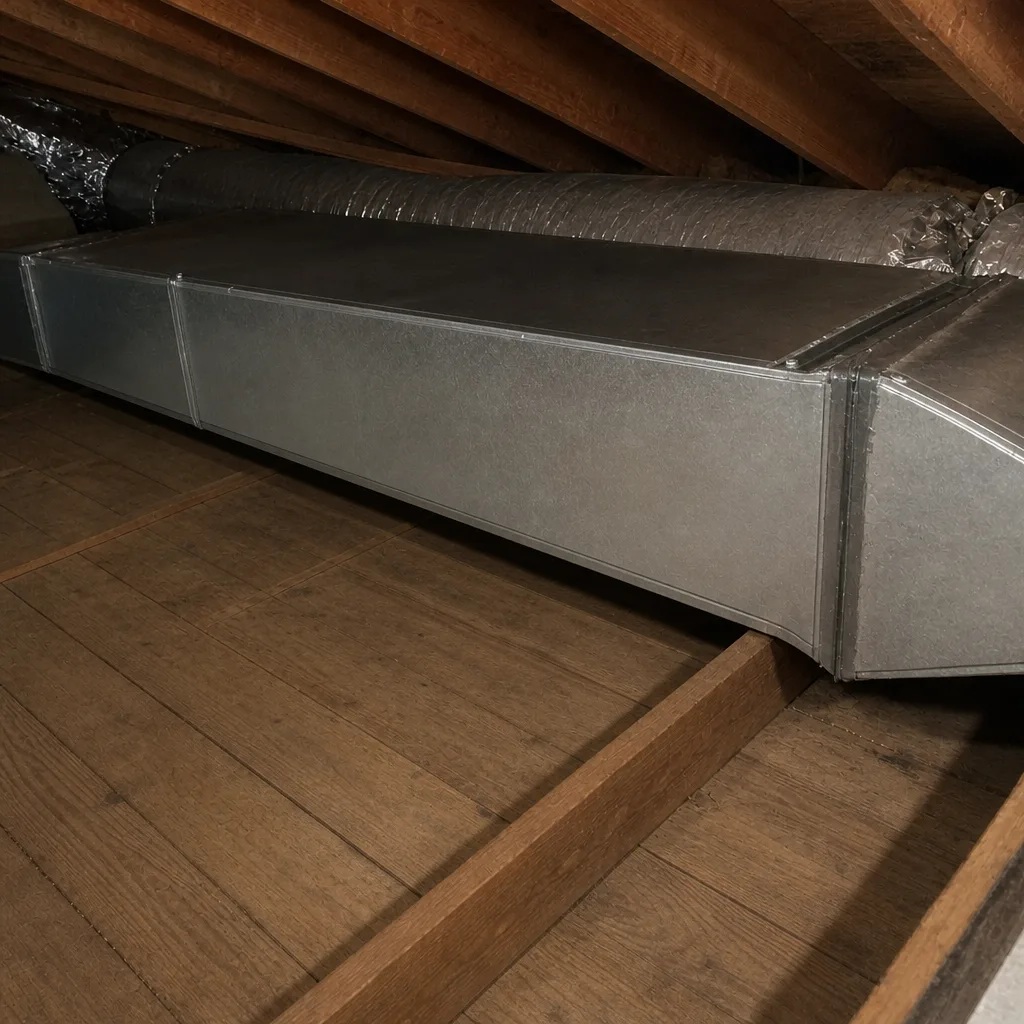
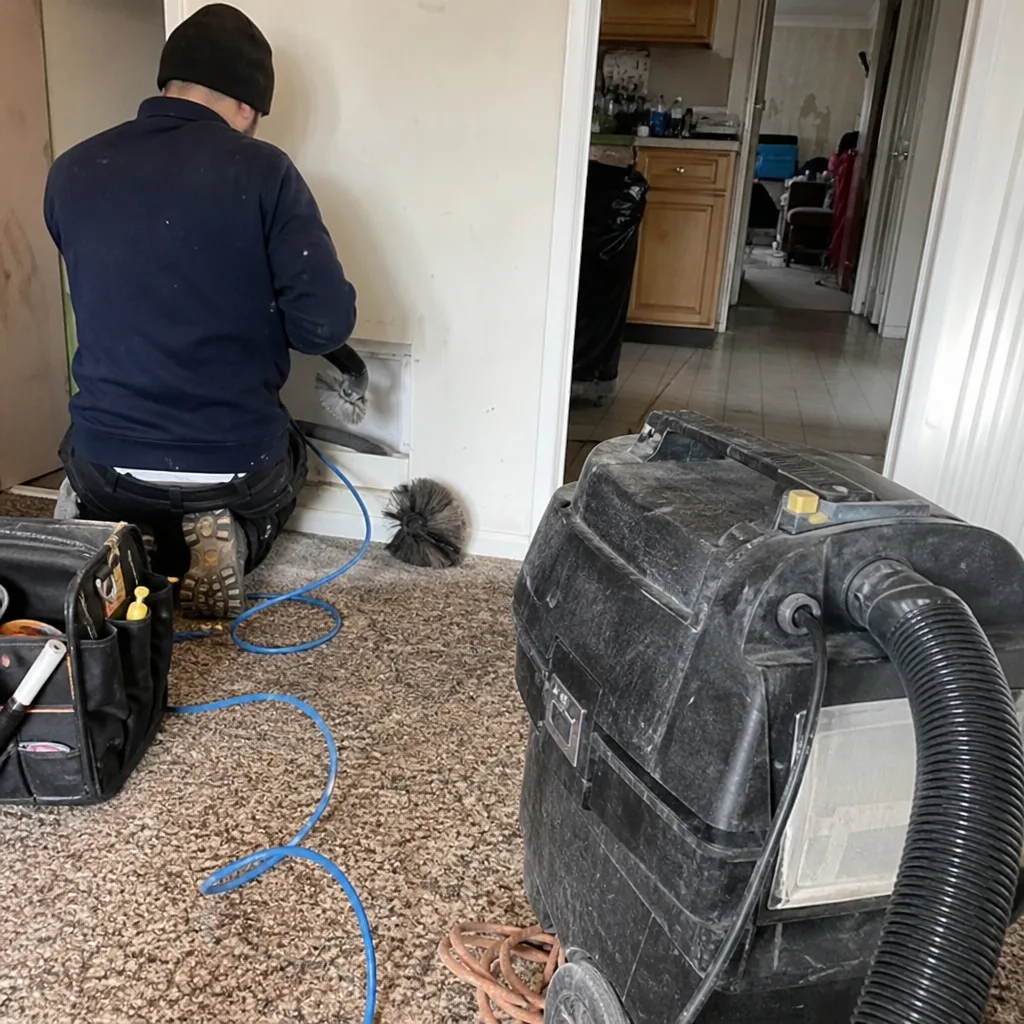
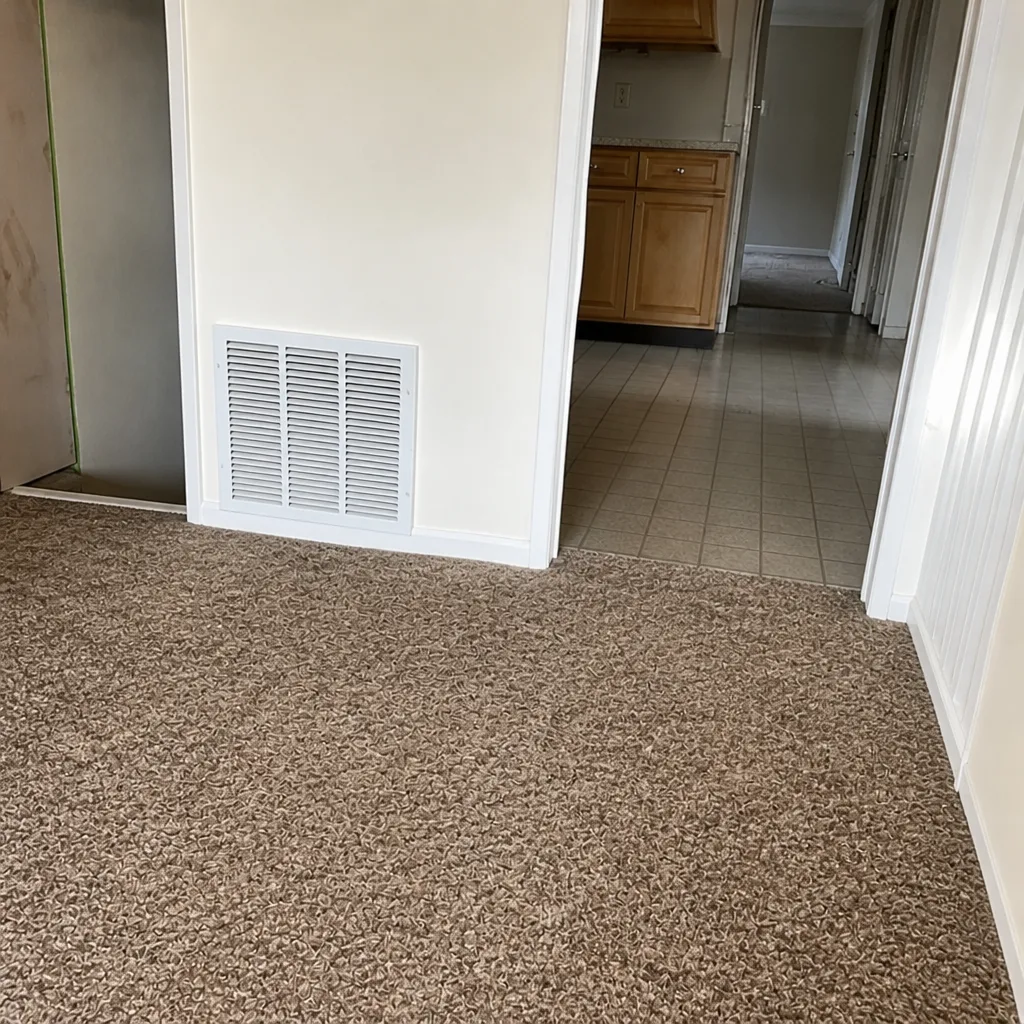
Whole-system duct and dryer vent check with before-and-after photos - you see exactly what came out of your vents
That "$99 whole-house special" is a bait ad - the real number appears once they are in your hallway, or the "clean" is a shop-vac at the register. We photograph the inside of your ducts before and after instead.
The Complete Guide to Air Duct Cleaning in Mariners Harbor
Most people assume a dirty duct problem starts in the ducts. In our experience, it usually starts in the driveway, with the equipment a contractor unloads. A shop-vac generates roughly 1 to 2 inches of water column in suction pressure. A proper negative-air machine generates 8 to 12. That gap is the whole story: a cleaning with weak suction loosens dust, stirs it around, and leaves the majority of it exactly where it was. You pay for motion, not removal. This guide explains what a thorough duct cleaning actually requires mechanically, how Mariners Harbor’s older housing stock and humid summers shape what builds up inside a duct system, and how to tell a real service from a coupon-deal sweep so you can judge whether the work you’re quoted matches what your home needs.
Styles & brands we work with
- Whole-home duct cleaning
- Dryer vent cleaning
- Camera inspection
- Sanitizing & deodorizing
Quick Answer
A proper air duct cleaning in Mariners Harbor combines three things that must happen together: mechanical agitation of the duct walls with a rotary brush system, continuous negative pressure from a commercial vacuum so dislodged debris is captured rather than recirculated, and sealing of every register and return so the suction actually pulls from the branch lines instead of the room. Skip any one of those and the job looks busy without doing much. Equipment names worth hearing are Rotobrush, Nikro, and Abatement Technologies. If a quote includes none of them, ask what machine is coming.
Table of Contents
- Why Mariners Harbor Ducts Get Dirty Differently
- The Correct Cleaning Sequence, Step by Step
- What the Equipment Names Actually Tell You
- Building Stock, Layout, and the Kill Van Kull
- What Duct Cleaning Costs in Mariners Harbor
- How to Read Before-and-After Photos Critically
- Cleaning, Sealing, Repair, and Sanitizing in One Visit
- The Dryer Vent Question Most Contractors Avoid
- Common Mistakes to Avoid
- When to Call a Professional
- Frequently Asked Questions
- The Bottom Line
Why Mariners Harbor Ducts Get Dirty Differently
Staten Island’s climate is humid for much of the year, and that changes what accumulates inside a duct system. In a dry inland suburb, dust tends to stay loose and powdery. In Mariners Harbor, with summer humidity that hangs in the 70s and 80s and an older housing stock where a lot of homes went up before 1980, the dust has moisture to bond with. It clings to duct walls, mats into a felt-like layer around the joints and elbows, and picks up whatever else is airborne in the house at the time.
Add the everyday realities of a dense, mixed-age neighborhood. Renovation dust from kitchens and bathrooms being updated. Efflorescence and mineral dust from basement and crawlspace work. Lint from laundry areas. Cooking vapor from kitchens that vent into a return rather than outside. Each of these adds a distinct layer, and each one adheres better when it’s humid.
What does that look like practically?
- Fuzzy buildup at the boot: the transition where the floor register meets the duct tends to clog first because it’s the narrowest point in the run and the last place airflow is strong enough to keep dust moving.
- Dark staining on the return grille: returns carry the highest volume of air and the highest dust load, so the grille and the trunk behind it discolor before supply runs do.
- Musty smell on startup: when organic matter has bonded to a humid duct wall, the first air through the system after a quiet stretch will carry some of that back into the room.
- Lint around the furnace filter slot: a sign that the filter is undersized for the dust load or is going too long between changes.
The point isn’t that every Mariners Harbor home is dirty. It’s that the same cleaning schedule that keeps an inland suburb reasonably clean may not move the needle on a humid, pre-1980 duct system. If this is where you’re starting from, air duct cleaning is the first-order fix, and the local air duct cleaning guide explains the mechanics in more depth. If you want the parent overview, start here: Air Duct Cleaning Mariners Harbor.
The Correct Cleaning Sequence, Step by Step
The order of operations is the part most people never see, and it’s the part that determines whether the job works. Run the steps out of order and each one undoes the previous. Here’s the sequence a proper cleaning follows:
- Walk the system before touching it. Count registers and returns, note the trunk layout and any branch runs, confirm the air handler location, and photograph the interior of a couple of boots and the plenum. You cannot clean a system you haven’t mapped.
- Set negative pressure first. A commercial vacuum with a HEPA or equivalent filter is connected at a strategic point in the system – often the main trunk or plenum – so the entire duct network is under continuous suction for the duration of the job. This is the step a shop-vac can’t replicate at the required pressure.
- Seal every register and return. Every opening that isn’t being worked on gets blocked. Without sealing, the vacuum sucks room air through the grilles instead of pulling from the branch lines, and the machine runs hard while the ducts stay loaded.
- Agitate the duct walls with a rotary brush. A Rotobrush-style rotary brush on a flexible whip is fed through each run, spinning against the duct interior to break the bonded layer free. Dust that doesn’t come off the wall can’t be pulled into the vacuum.
- Extract, don’t just loosen. The negative pressure captures what the brush has freed. This is the crucial pairing: agitation without extraction recirculates dust, and extraction without agitation only pulls what’s already loose.
- Clean the components that feed the ducts. Supply plenum, return plenum, blower compartment, evaporator coil face, and filter rack are part of the system. A clean duct network attached to a grimy plenum recontaminates itself the moment the system runs.
- Sanitize or treat where appropriate. Guardsman-grade protective treatments, applied after cleaning, address the residue layer and slow re-accumulation. This is a post-clean step, never a substitute for cleaning.
- Verify with photos and a final walk. Photograph the interior conditions in the same spots you photographed before, then re-set any register grilles, restore the filter, and confirm airflow and system behavior before leaving.
If a contractor proposes to “vacuum the vents,” that’s step five without steps two through four. It’s the most common version of the work you’ll be quoted in the neighborhood, and it’s worth understanding why it underperforms.
What the Equipment Names Actually Tell You
Equipment is the shortcut to judging a contractor’s seriousness. Every brand below is a known professional system, and a contractor who names them is usually telling you something real about investment level.
- Rotobrush: a rotary brush and vacuum system built specifically for residential duct cleaning. It’s the industry benchmark for mechanical agitation. If a contractor uses the term generically, it takes ten seconds to confirm the machine is actually on the truck.
- Nikro: a line used by NADCA-aligned contractors and disaster restoration professionals. It signals familiarity with the commercial and recovery side of the trade, which matters when the job involves heavy contamination rather than routine dust.
- Abatement Technologies: air scrubbers and negative-air units from the environmental remediation side of the industry. Deploying these on a residential job means dislodged particulates get captured during the cleaning rather than drifting back into living space. In our experience, this is the difference homeowners feel most – the house doesn’t smell dustier after the cleaning than before it.
- Aprilaire and Honeywell: the two most common whole-home filtration and humidifier platforms. Post-clean sanitizing treatments that are compatible with these systems slot into the existing air quality setup rather than competing with it.
You don’t need to become a duct cleaning equipment expert. You need to recognize the difference between a professional-grade machine and a shop-vac with a hose taped to a register. When you get a quote, ask two questions: what machine will run the negative pressure, and what will do the agitation. Real answers come without hesitation.
Building Stock, Layout, and the Kill Van Kull
Mariners Harbor sits on the western edge of Staten Island, close to the Kill Van Kull waterfront corridor. That geography and the housing stock around it produce a specific set of duct problem patterns you won’t see in a newer inland development.
The first factor is the age of the housing. A lot of Mariners Harbor homes were built before 1980, when duct design was more modest and filter grilles were smaller. Original systems in these homes often present with:
- Flexible duct runs in tight spaces. Flex duct sags over time and collects dust at the low points of each sag. Rotary brush systems handle this well, but they need to be fed slowly to avoid damaging older flex.
- Sheet metal trunk with taped joints. Original tape and mastic dry out and fail, opening small leaks that draw unfiltered air from unconditioned spaces – a real contributor to duct contamination.
- Undersized returns. Many older homes have a single central return serving the whole house. That concentrates the dust load and makes the return trunk the first priority in cleaning.
- Register boots that don’t seal to the subfloor. Gaps around the boot let basement or crawlspace air get pulled directly into the supply stream.
The second factor is airflow particulate. Homes along and near the Kill Van Kull corridor often see faster accumulation than inland ZIP codes because the surrounding industrial and port activity produces airborne particulate that isn’t limited to the immediate waterfront. Neighborhoods up the hill get some of the same air movement, but the pattern is heaviest near the corridor.
The practical takeaway: in a Mariners Harbor home, the cleaning interval should be shorter than what a general online calculator might suggest, and the return system should be inspected every time, not assumed clean.
What Duct Cleaning Costs in Mariners Harbor
Air duct cleaning in Mariners Harbor typically runs in the ranges below, based on the scope of the job and the number of register runs in the home. These are typical ranges for the neighborhood; a written estimate sets the final price. Whole-system flat pricing is the right model here – you’re paying for the full cleaning, not a per-vent line item.
| Service | Typical Range (Estimated) |
|---|---|
| Single-family home duct cleaning (whole system) | $350 – $750 |
| Apartment or small unit duct cleaning | $250 – $450 |
| Duct cleaning plus sanitizing treatment | $500 – $950 |
| Dryer vent cleaning (standalone) | $125 – $250 |
| Duct sealing (per-system) | $400 – $900 |
| Duct repair (small tears, disconnected runs) | $200 – $600 |
| Air quality and sanitizing treatment (post-clean) | $150 – $400 |
Three things drive where you land inside those ranges: the number of register runs, the condition of the return system, and how much sealing or repair the job requires. A pre-1980 Mariners Harbor home with a single return and leaky joints will usually sit toward the middle of the single-family range because the return trunk needs more time. A newer townhome with multiple returns can come in lower.
Two red flags on price to watch for. First, a teaser number that gets “adjusted” once the technician is inside the home – the industry’s reputation for this is why flat, written pricing matters. Second, a number so low it can’t cover the equipment time; that usually means the negative pressure machine is small, the sealing step is skipped, or the entire job is one pass with a shop-vac. Either way, the price was never going to buy you a real cleaning.
For the full breakdown and the same ranges applied to different home types, the air duct cleaning service page goes deeper on scope by home size.
How to Read Before-and-After Photos Critically
Before-and-after photos are the single most useful verification tool available, and also the most abused. Here’s how to read them so you know whether the images show real work.
What genuine photos look like:
- The “before” shows the inside of a specific duct – typically the plenum, a branch boot, or the return trunk – with the register grille off and a recognizable surrounding detail (stud, pipe, wedge of floor) visible.
- The “after” shows the exact same view, in the same lighting, with the same surrounding details. The change is measurable against fixed reference points.
- You can see the duct walls, not just a pile of debris on a drop cloth.
- Any interior photo is dated, and the photos are shown to you on-site so you can match them to the ducts in your own home.
What staged or misleading photos look like:
- Generic marketing photos used across multiple jobs – you’ll spot them because the duct types don’t match your home.
- “Before” showing a literal shop-vac canister full of dust, with the “after” showing a clean register grille only. The canister proves dust exists somewhere; it doesn’t prove the ducts were cleaned.
- “After” photos that show only the register grille, which is the easiest thing to clean and least informative about the trunk.
- No plenum photo. The plenum is where the honest before-and-after is most revealing.
- Stock images with watermarks or a phone-screen border.
The rule of thumb: ask for interior photos taken at your home, in the same spot before and after. If those aren’t forthcoming, that’s your answer about the job. We’ve seen enough of these photos to know which ones tell the truth.
Cleaning, Sealing, Repair, and Sanitizing in One Visit
Duct work is easier to get right when it happens in one visit rather than four. Splitting cleaning, sealing, repair, and sanitizing across separate contractors means each one inherits the conditions the previous one left behind, and small problems get missed in the handoffs.
The four categories line up naturally:
- Cleaning removes the accumulated debris from the duct walls, plenum, and components.
- Sealing closes the leaks that allowed unfiltered air into the system – typically at joints, boots, and the plenum seams. Sealing after cleaning is what keeps a cleaned system clean.
- Repair addresses damage the cleaning surfaced: disconnected flex runs, crushed sections, torn insulation inside the duct, or a boot that’s pulled loose from the subfloor.
- Sanitizing treats the residue layer with a Guardsman-grade protective finish or a compatible Aprilaire or Honeywell treatment. This is a post-clean step, always, and never the whole job.
Doing all four in one visit means the assessment is based on the cleaned condition, not the pre-clean guess. That’s the advantage of working with a crew that does duct work exclusively: the diagnosis is honest because they’re not looking to upsell a general HVAC service call they don’t actually staff. If HVAC cleaning is also needed – blower, coil, and plenum – that travels with the same visit.
Property and facility managers overseeing multi-unit buildings get a different version of the same structure: cleaning and sanitizing on a scheduled cycle per unit, with repair and sealing prioritized on the units showing the most leakage. Getting all of it from one crew simplifies scheduling across buildings in a way that managing multiple vendors doesn’t.
The Dryer Vent Question Most Contractors Avoid
Dryer vent cleaning is the duct service most often tacked onto a job as an upsell and most often done incompletely. It’s also the one with the clearest safety case, because a clogged dryer vent is a fire risk rather than just an airflow problem. The lint trap catches a fraction of the lint a dryer produces – the rest travels down the vent and sticks to the inside of the duct, especially where the run bends.
What a proper dryer vent cleaning involves:
- Disconnecting the dryer from the vent at the back (contractors don’t touch the gas line; that’s a separate trade).
- Feeding a rotating brush or specialized vent tool through the full length of the run to the exterior termination.
- Attaching a vacuum at the exterior to pull the dislodged lint out rather than letting it spill inside the wall cavity.
- Confirming the exterior flap operates freely and isn’t blocked by nests, screens, or a crushed hood.
- Reconnecting and testing airflow with the dryer running.
Standalone dryer vent cleaning in Mariners Harbor is offered as its own service because it’s a real job, not a checkbox. If you’re already having the HVAC system cleaned, doing the dryer vent on the same visit is straightforward. The dedicated page on dryer vent cleaning covers interval recommendations and what to watch for between cleanings.
Common Mistakes to Avoid
- Choosing on coupon price alone. The lowest advertised price in a competitive market almost always reflects a smaller machine, skipped steps, or a scope that will be renegotiated on-site. The coupons are designed to get the technician in the door, not to cover the work.
- Accepting a clean with no negative pressure machine. If the contractor arrives with a shop-vac and a hose, the cleaning is essentially cosmetic. Ask what machine is running before the work starts.
- Letting the crew clean without sealing the registers first. Unsealed registers mean suction pulls room air, and branch lines stay loaded even while the vacuum runs.
- Skipping the return trunk and plenum. In pre-1980 Mariners Harbor homes with a single return, the return trunk carries the heaviest dust load. Cleaning only supply registers misses the biggest accumulator.
- Accepting “after” photos that show only the register grille. The grille is the easiest part to clean and tells you nothing about the trunk, the plenum, or the branch boots.
- Doing sanitizing without cleaning. A treatment sprayed onto an uncleaned duct wall bonds to the debris layer. Cleaning has to come first, every time.
- Ignoring the dryer vent between cleanings. The dryer vent is the one run that carries real fire risk. Treat it as its own service line, not an add-on you get to eventually.
When to Call a Professional
Some jobs call for a professional and some don’t. If you check your register grilles and find light, loose dust, changing the HVAC filter and vacuuming the grille usually covers it. When it’s time to call us:
- You can see visible buildup or matted dust on the inside of the register boot or plenum.
- The house smells musty on startup and the smell doesn’t clear after a filter change.
- Airflow is noticeably weaker at some registers than others, or the system seems strained.
- You’ve had major renovation work done – dust from a kitchen or bath remodel gets pulled into the return system and stays there.
- Someone in the household has allergies or respiratory sensitivity, and you want a verified clean rather than a cosmetic pass.
- The dryer is taking longer to dry clothes than it used to.
Air Duct Cleaning Mariners Harbor offers free estimates in Mariners Harbor – call (844) 625-7002. We answer 24/7. Fast dispatch from 7am to 7pm, Sunday through Friday. Our technicians have up to 8 years of experience, and every estimate is written with a flat price per system agreed before work starts, so you know the number before anyone touches a duct.
Frequently Asked Questions
Air duct cleaning in Mariners Harbor typically costs $350 to $750 for a whole single-family home, with apartments and small units running $250 to $450. Adding sanitizing treatment moves the range to $500 to $950, and specialized work like duct sealing or repair is priced separately based on scope. Call (844) 625-7002 for an exact quote – estimates are free.
Cheaper quotes usually come from smaller machines, skipped sealing and agitation steps, or a scope that gets renegotiated once the technician is on-site. A proper cleaning uses a negative-air machine operating at 8 to 12 inches of water column, a rotary brush for agitation, and sealed registers – none of which is inexpensive to run. Call (844) 625-7002 for a written, flat-priced estimate you can compare honestly.
Ask for interior before-and-after photos taken at your home, in the same spot, with recognizable surrounding details in both frames. Plenum and trunk photos are the most telling. A contractor willing to show you those before they leave is telling you the truth about the work. Call (844) 625-7002 – we can walk you through what the photos will show.
Most homes benefit from a full cleaning every three to five years, but Mariners Harbor homes near the Kill Van Kull corridor and pre-1980 construction often see faster accumulation and fall closer to the three-year end. Annual dryer vent cleaning is separate. Call (844) 625-7002 and we’ll scope the interval to your specific system.
Yes. Our five service categories – duct cleaning, dryer vent cleaning, HVAC cleaning, duct repair and sealing, and air quality and sanitizing – cover single-family homes and multi-unit buildings managed by property and facility managers. Call (844) 625-7002 to scope a single unit or a full building schedule.
Yes – HVAC cleaning covers the blower, evaporator coil, and plenum that feed the ducts, and it travels on the same visit as duct cleaning. Cleaning the ducts without cleaning the components recontaminates the system the moment it runs. Call (844) 625-7002 to schedule a combined scope.
The Bottom Line
A real duct cleaning is a mechanical process, not a marketing one. The three non-negotiables are continuous negative pressure at professional suction levels, rotary brush agitation of the duct walls, and sealed registers throughout the work. Rotobrush, Nikro, and Abatement Technologies are the equipment names that signal a contractor has invested in this trade; if none of them appear in the quote, ask what’s actually coming. Mariners Harbor homes built before 1980 with a single return and a humid summer need more than a shop-vac pass and a coupon. Flat pricing per system, written before work starts, and interior before-and-after photos give you a way to verify what you bought. Call (844) 625-7002 for a free estimate.
Written by the team at Air Duct Cleaning Mariners Harbor.
See the difference
 Before
 After
 Before
 After
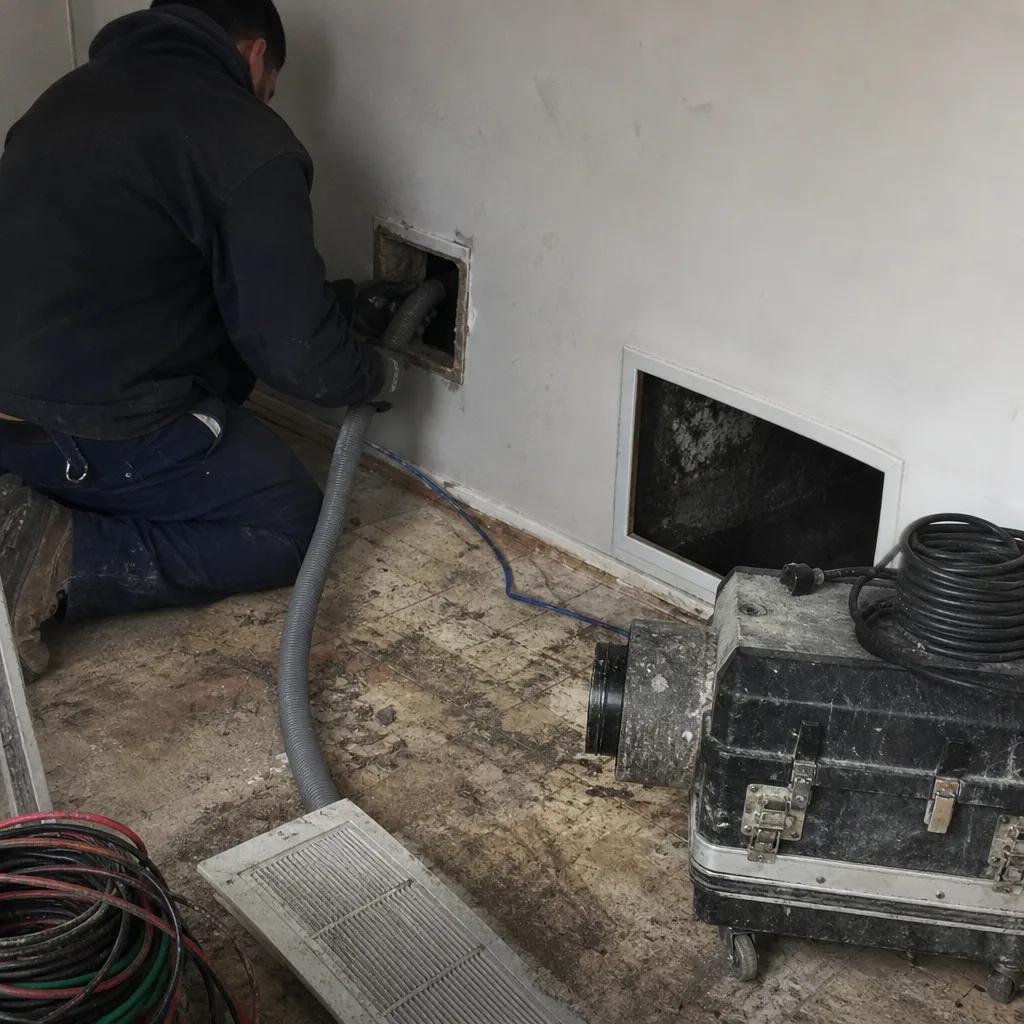 Before
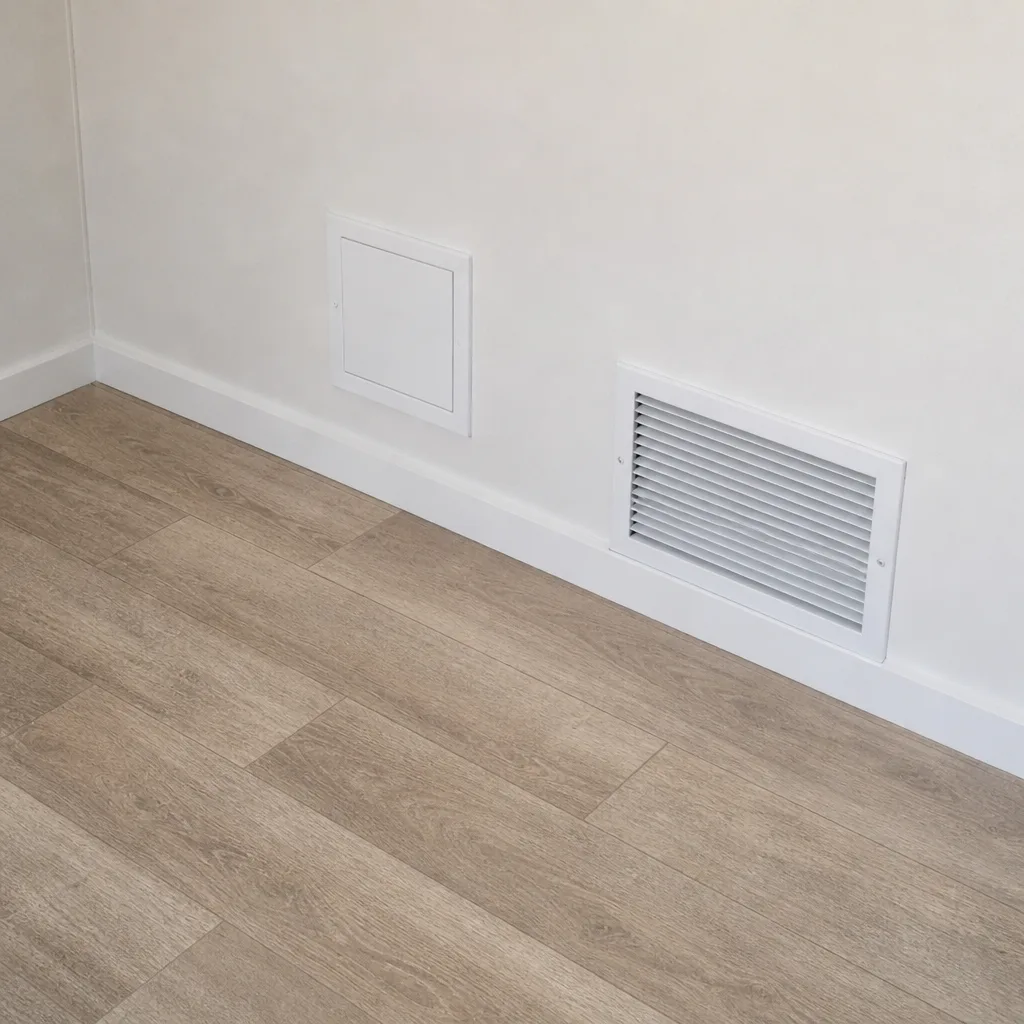 After