
Last updated November 24, 2026
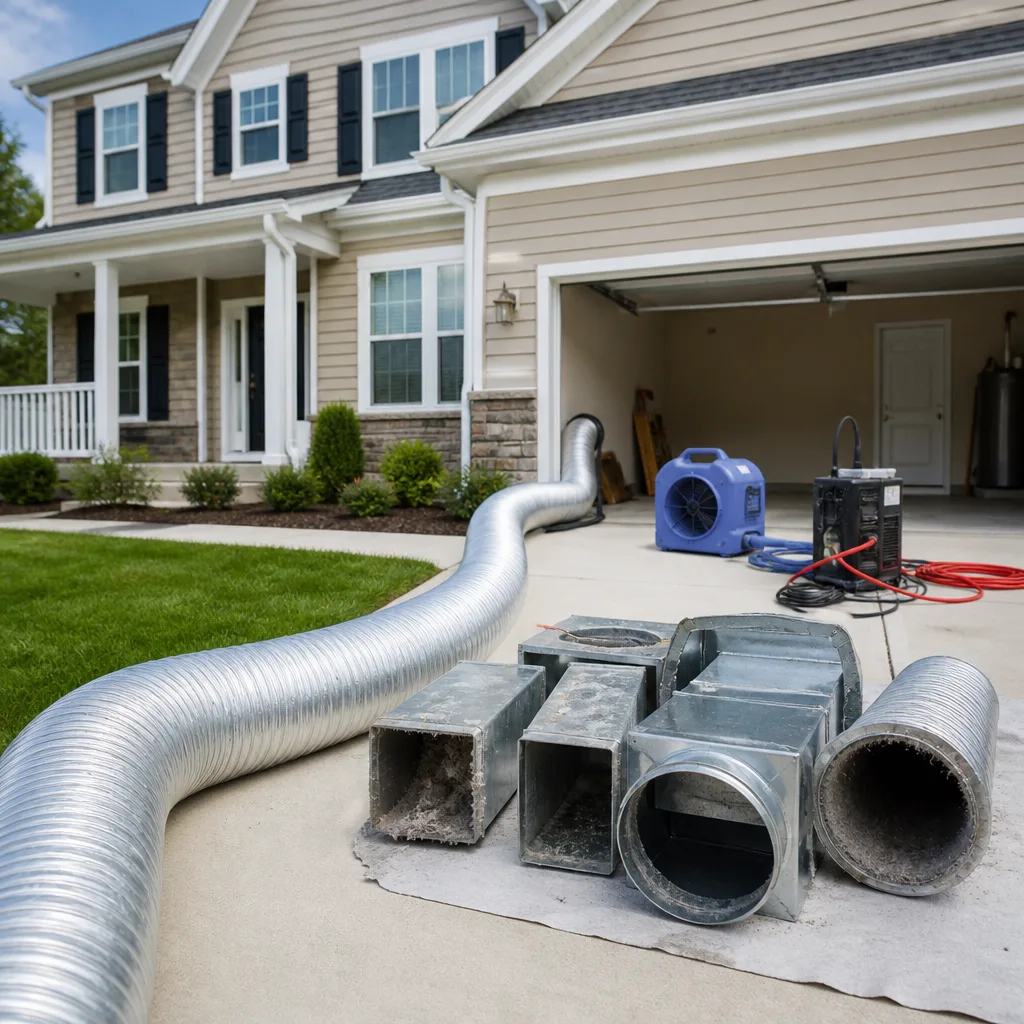 Whole-home duct cleaning
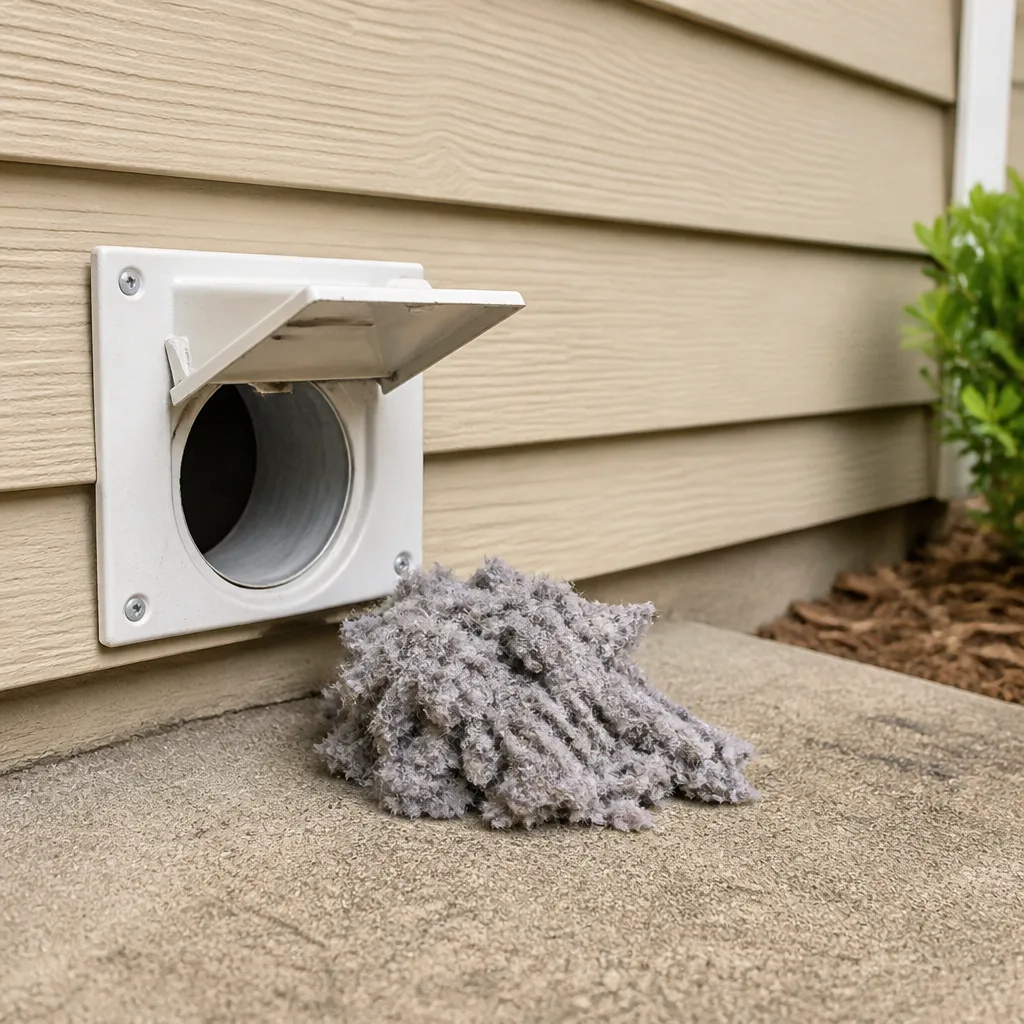 Dryer vent cleaning
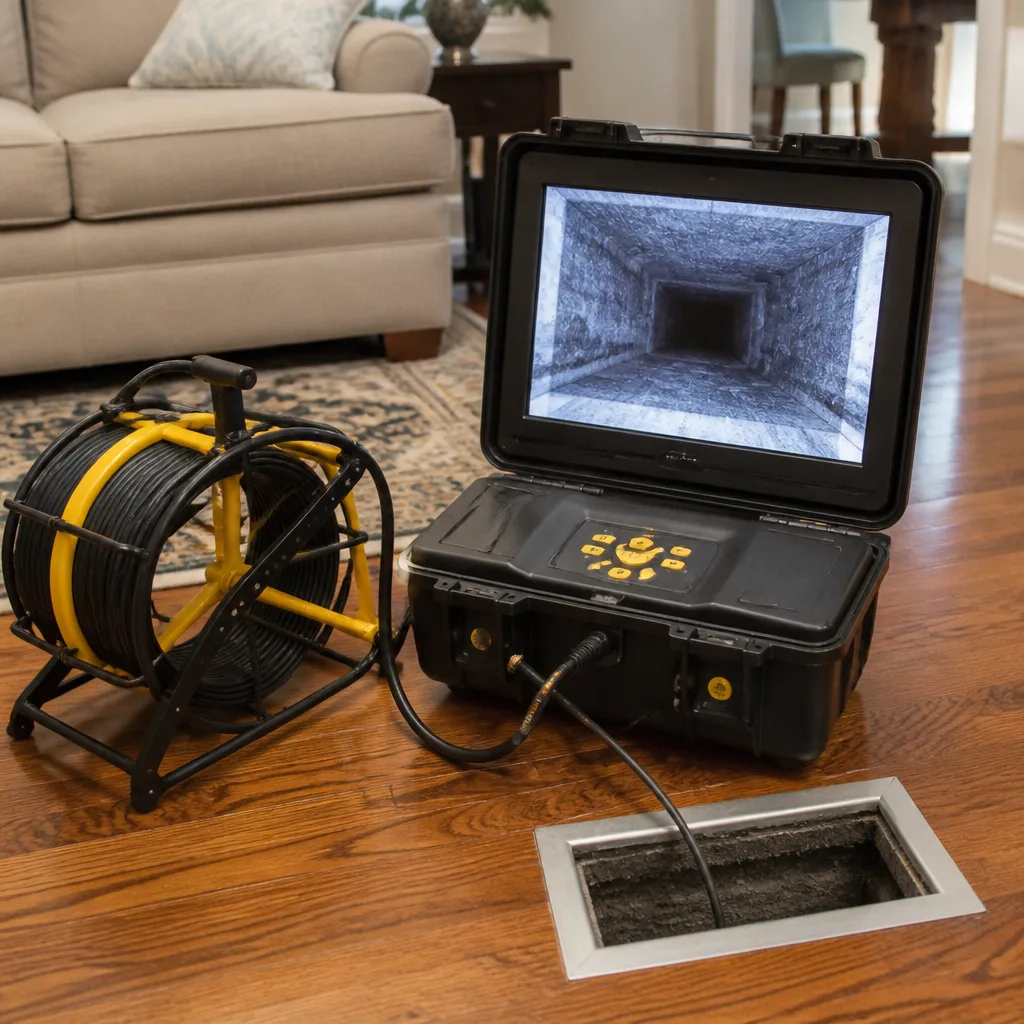 Camera inspection
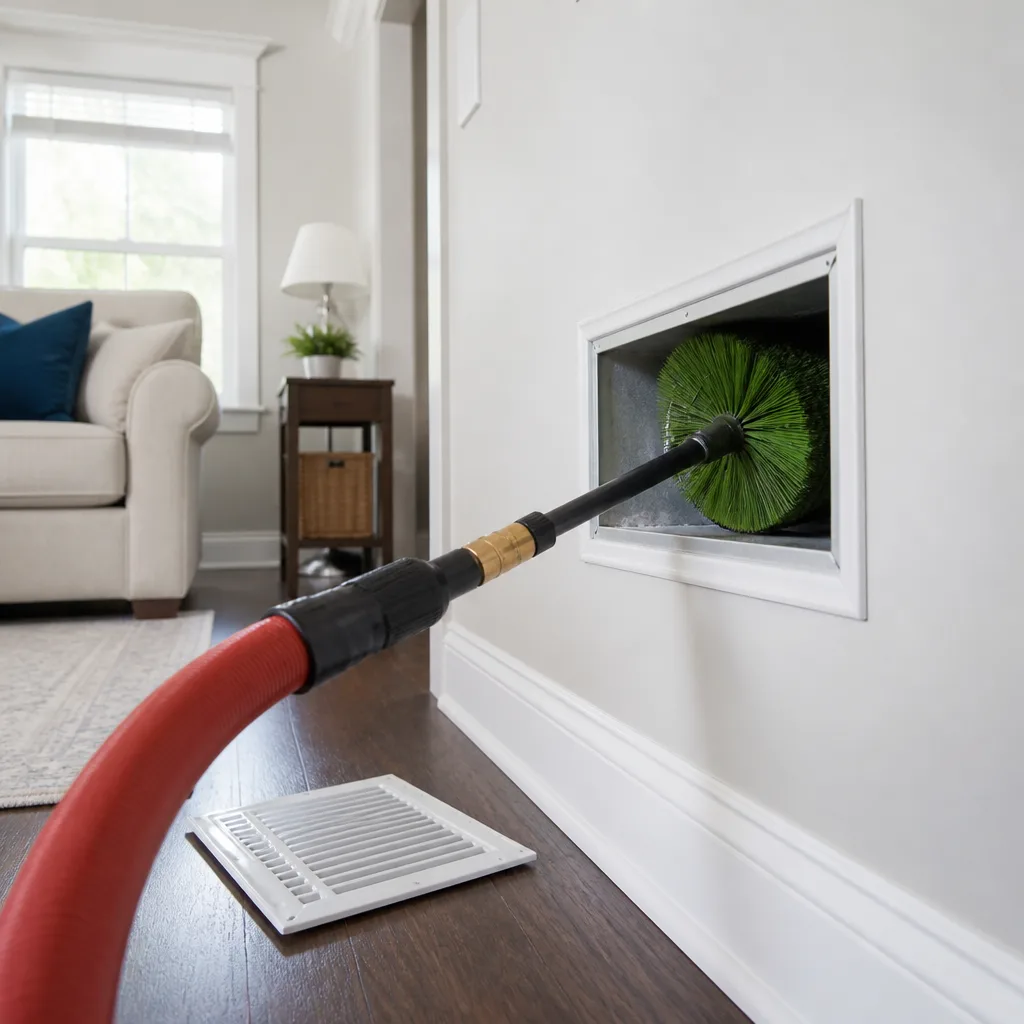 Sanitizing & deodorizing
Whole-system duct and dryer vent check with before-and-after photos - you see exactly what came out of your vents
That "$99 whole-house special" is a bait ad - the real number appears once they are in your hallway, or the "clean" is a shop-vac at the register. We photograph the inside of your ducts before and after instead.
DIY vs Professional Air Duct Cleaning: The Mariners Harbor Homeowner’s Decision Guide
Here’s the number that settles most of this debate before it starts. A consumer shop-vac pulls roughly 55 CFM of airflow. A professional negative-air machine moves somewhere between 2,000 and 4,000 CFM. That isn’t a skill gap you can close with better technique or a sturdier brush. It’s a physics gap. In our experience across Mariners Harbor, the homeowners who get hurt most by DIY duct work aren’t the ones who skip it entirely – they’re the ones who agitate years of settled debris and then have no way to capture it, so it redistributes through the house instead of leaving it. This guide breaks down exactly what you can realistically do yourself, what genuinely requires professional equipment, and how to decide which side of the line your system falls on.
Quick Answer
Register cleaning, filter replacement, and visual inspection of accessible vents are reasonable DIY tasks. Main trunk line cleaning, debris extraction, and any job requiring negative-pressure containment need professional-grade equipment – consumer vacuums and hardware-store kits simply can’t move enough air volume to extract debris without redistributing it. If your ducts are visibly coated, if you’ve had renovation dust, or if your home has old rigid ductwork, professional cleaning is the right call.
Styles & brands we work with
- Whole-home duct cleaning
- Dryer vent cleaning
- Camera inspection
- Sanitizing & deodorizing
Table of Contents
- The Physics Gap: Why Equipment Capacity Decides the Outcome
- What You Can Realistically Accomplish Yourself
- What Genuinely Requires Professional Equipment
- The Mariners Harbor Housing Factor: Why DIY Carries Extra Risk Here
- Cost Comparison: Consumer Kits vs Professional Service
- The Decision Matrix: When DIY Is Enough and When It Backfires
- The Equipment Behind a Professional Clean
- Common Mistakes to Avoid
The Physics Gap: Why Equipment Capacity Decides the Outcome
Air duct cleaning is an extraction problem, not a scrubbing problem. The goal is to dislodge settled particulate and then capture it before it has a chance to settle anywhere else – in your furniture, your carpets, or the rest of your duct system. That capture step depends on one thing above all else: airflow volume, measured in cubic feet per minute (CFM).
A typical consumer shop-vac, even a large one, tops out around 55 CFM. Some portable duct cleaning kits attach a brush to a shop-vac hose and claim to do the job clean. What they don’t change is the airflow ceiling. At 55 CFM, you can loosen dust in the first few feet of a register run. You can’t pull it out of a 30-foot trunk line, and you certainly can’t create enough negative pressure to keep dislodged particulate from going airborne in the living space.
Professional negative-air machines move 2,000 to 4,000 CFM. That’s a 40 to 70 times difference in air movement. When a machine pulls that much air through a sealed system with a HEPA-filtered exhaust, the debris travels one direction: out. That’s why professional setups pair the high-CFM vacuum with rotary brush agitation – the brush loosens what’s stuck to the duct walls, and the airflow removes it. The two work together. Without the airflow, the brush just moves dirt from the duct wall into the air.
For Mariners Harbor homeowners, this distinction matters because it isn’t about how hard you scrub. Two identical brush strokes on a duct wall produce completely different results depending on whether you’re pulling 55 CFM or 3,000 CFM behind it. That’s the physics gap, and no technique closes it.
What You Can Realistically Accomplish Yourself
Not every duct task needs a truck-mounted or trailer-mounted system. Several maintenance tasks are genuinely within reach for a careful homeowner, and doing them well reduces how often you need a full professional clean. Here’s what we’d consider reasonable DIY territory in Mariners Harbor.
- Register and grille cleaning. Pull the vent covers off, wash them in a utility sink with warm soapy water, dry them completely, and reinstall. This removes the visible surface dust that makes homeowners think their ducts are dirty. It’s a real improvement to appearance and airflow, and it takes 20 minutes.
- Filter replacement on schedule. Change the furnace or air handler filter according to the manufacturer’s recommendation – typically every one to three months, more often during heavy pollen season or after renovation work. A clogged filter is one of the most common causes of “dirty duct” complaints, and it’s entirely a homeowner responsibility.
- Visual inspection of accessible flex duct. In an unfinished basement or crawlspace, you can look at the outside of accessible flex runs for kinks, sagging, or disconnected joints. If you see an obvious tear or a joint that’s come apart, note it for a professional to repair and seal properly – flex duct repairs need the right tape and technique or they leak worse than before.
- Dryer vent visual check. Look behind the dryer and at the exterior vent flap. If the flap won’t open freely or you see lint packing around the transition hose, that’s worth flagging – though the full-length cleaning should go to a professional. dryer vent cleaning is a fire-safety category, not a cosmetic one, and we treat it that way.
- Spot-cleaning the floor around registers. Vacuuming and wiping the floor within a foot of each register reduces how much loose debris gets drawn back into the system. It’s a low-effort habit with a real effect on indoor dust levels.
Those are genuine wins. What they don’t do is clean the inside of the duct system – and that’s the part most people picture when they say “duct cleaning.”
What Genuinely Requires Professional Equipment
The inside of a residential duct system is a hostile working environment for consumer equipment. Long trunk lines, tight turns, and rigid metal ductwork with years of accumulated dust film require tools that can reach, agitate, and extract – all while keeping the debris contained. Here’s what falls clearly on the professional side of the line.
- Main trunk line cleaning. The main trunk is typically the largest-diameter, longest duct run in the house, and it holds the most debris. A shop-vac hose rarely reaches it from a register, and even when it does, 55 CFM can’t move the volume of material inside.
- Debris extraction without redistribution. Any professional clean is designed around the principle that dislodged debris must be captured, not just loosened. That requires the high-CFM vacuum and a sealed system so the vacuum is pulling air through the ducts, not leakage points.
- Negative pressure containment. The working space is put under negative pressure so that dust stays inside the duct and gets routed to the vacuum, not into the room. This is the step DIY setups almost never replicate, and it’s the single biggest reason DIY duct work can make indoor air quality worse rather than better.
- Rotary brush agitation in rigid ductwork. Rigid metal ductwork holds onto dust film differently than flex duct does. Rotary brush systems feed a spinning brush head through the duct to agitate the walls while the vacuum extracts. Hand brushes can’t reach the full length or generate enough mechanical action.
- Post-cleaning sanitizing and filtration integration. After cleaning, professional sanitizing treatments and whole-home filtration compatibility (Aprilaire and Honeywell systems, for example) provide a lasting benefit that consumer products can’t match at the system level.
This is also where we’d point out that air duct cleaning and HVAC cleaning overlap closely. The blower, evaporator coil, and plenum are part of the same air path, and cleaning the ducts without addressing HVAC cleaning leaves a reservoir of debris just upstream of everything you’ve just cleaned.
The Mariners Harbor Housing Factor: Why DIY Carries Extra Risk Here
Mariners Harbor’s housing stock is a meaningful factor in this decision. A large share of the neighborhood’s homes were built before modern duct design standards, which means older rigid sheet-metal trunk lines, original return systems, and ductwork that has had decades to accumulate settled debris. Older housing stock doesn’t automatically mean “needs cleaning,” but it does mean the debris is more likely to be loosely settled rather than firmly attached – the kind that goes airborne the moment it’s disturbed.
That’s the specific risk with DIY in neighborhoods like Mariners Harbor: not that you’ll break anything, but that you’ll agitate the sediment without being able to capture it. A homeowner runs a brush kit through the first section of duct, dislodges years of fine particulate, and the shop-vac pulls a fraction of it out while the rest drifts into the living space and back into the HVAC return. The next thing they know, the house feels dustier, not cleaner. We’ve seen this pattern repeatedly, and it’s the single most common reason homeowners call us after a DIY attempt.
Older homes in Mariners Harbor also tend to have more disconnected or under-sealed duct joints than newer construction. Even a small leak in a duct joint undermines the negative-pressure principle, because the vacuum ends up pulling ambient room air through the leak instead of air through the duct. That’s a repair and sealing issue, not a cleaning one – which is why we handle duct repair and sealing alongside cleaning so a system isn’t left with leaks that undo the work.
Cost Comparison: Consumer Kits vs Professional Service
The cost argument for DIY is real, but it has to account for what you actually get. A hardware-store duct cleaning kit – typically a shop-vac adapter with a brush wand – runs anywhere from about $30 to $150. Renting a more capable vacuum can run higher, but most rental units still top out well below professional negative-air capacity. What the kit can’t do is what determines whether the job actually worked.
Here’s the honest breakdown of what each option delivers.
- Consumer brush-and-vac kit ($30-$150): Cleans register covers and the first few feet of accessible duct. Cannot reach main trunk lines. Cannot generate enough negative pressure. Leaves the bulk of accumulated debris in place or, worse, redistributes it.
- Consumer-grade vacuum rental: Moves more air than a shop-vac but far below professional equipment. No HEPA exhaust, no sealed system setup, no rotary brush. Useful for surface debris near registers, not for a full-system clean.
- Professional full-system cleaning: Priced per job by written estimate. Includes main trunk line cleaning, rotary brush agitation, negative pressure containment with HEPA-filtered exhaust, and often sealing, sanitizing, and filtration integration in the same visit. The estimate sets the final price, and there is no per-vent pricing.
Our pricing isn’t a fixed package, because every Mariners Harbor home is different – duct length, home size, how many returns, and whether repair or sealing is needed all factor in. What we can tell you is that a written estimate is set per job with one flat price agreed before any work starts, and you see before-and-after photos of your own ducts so you can judge the result yourself. That transparency is the part a consumer kit can’t offer.
The Decision Matrix: When DIY Is Enough and When It Backfires
Use this matrix as a starting point. It’s organized around the two factors that predict the outcome best: what kind of contamination you’re dealing with, and how old or how complex your system is.
When DIY Is Genuinely Sufficient
- Light surface dust at registers only. If you pull the vent cover and the interior of the duct looks clean beyond the first few inches, register cleaning and filter replacement cover it.
- No visible debris buildup. No dark coating on the duct walls, no dust trails at grilles when the system kicks on.
- Newer duct systems with strong seals. If the system was installed or sealed within the last several years, joint leakage is less likely and the system is more resilient to minor disturbances.
- Routine maintenance mode. Filter changes, register washing, and surface vacuuming are always appropriate DIY tasks.
When DIY Makes Conditions Worse
- Visible dust film or debris in the duct interior. If you can see a coating on the duct walls, the volume of material is beyond what a consumer vacuum can extract. Brushing it will just loosen it.
- Post-renovation dust or recent remodeling. Fine construction dust (drywall, sawdust, insulation fibers) doesn’t come out with a shop-vac and can be more problematic than the original dust because of its particle size.
- Older rigid ductwork with visible joint gaps or disconnected runs. Leaks break the negative-pressure principle and make DIY work less effective, not more.
- Persistent musty or stale odors that don’t clear after filter changes. Odors usually signal contamination in the system that consumer cleaning can’t reach.
- Recent water intrusion, pest activity, or mold evidence. Any of these is a professional assessment situation, not a brush-and-vac situation.
If you’re in the second column, the smart move is a professional clean – a professional-grade air duct cleaning Mariners Harbor service that can extract the debris rather than redistribute it.
The Equipment Behind a Professional Clean
Renting a stronger vacuum is not the same as a professional setup. The difference shows up in the specific equipment a specialist brings and how it’s used together. Here’s what we bring to Mariners Harbor jobs and why each piece matters.
- Rotobrush rotary brush systems. Rotobrush equipment is an industry benchmark for mechanical duct agitation and extraction. The rotary head spins against the duct walls to break up the dust film while the extraction side pulls the loosened debris out. It’s a single-system approach that keeps agitation and extraction working together instead of in sequence.
- Nikro equipment. Nikro is used by NADCA-certified contractors and disaster restoration professionals. The high-CFM capability is what separates a real extraction from a shop-vac imitation. Combined with proper HEPA filtration, debris leaves the duct and doesn’t return to the room.
- Abatement Technologies air scrubbers. These are deployed on-site during the cleaning, capturing dislodged particulates rather than recirculating them into the home. It’s the piece most homeowners don’t think about, and it’s exactly what a DIY setup is missing.
- Aprilaire and Honeywell-compatible air quality solutions. Post-cleaning sanitizing and filtration treatments integrate directly with existing whole-home filtration systems. That means the clean doesn’t just remove debris – the system afterward has a better chance of keeping it cleaner longer.
- Guardsman-grade protective treatments. Available as part of our Air Quality & Sanitizing service tier for homeowners who want the post-clean result to last longer between services.
One crew handles the full scope in a single visit – cleaning, repair, sealing, sanitizing, and filtration – so you’re not coordinating multiple vendors. Our technicians have up to 8 years of experience, and they’re trained specifically on these systems because the outcomes depend on using them correctly.
Common Mistakes to Avoid
These are the mistakes we see most often from Mariners Harbor homeowners who’ve tried the DIY route or who’ve hired a low-cost clean before.
- Assuming a coupon price is a full-system clean. A very low advertised price usually covers register covers and maybe the first few feet of duct – the parts a shop-vac can reach. The main trunk line is often excluded. Ask exactly what’s covered in writing before you book.
- Brushing without extraction. A brush that agitates debris without high-CFM extraction behind it just relocates the dust into the air. This is the core reason DIY can make indoor air quality worse.
- Skipping the HVAC side. Cleaning the ducts while the blower, coil, and plenum hold their own debris is a half job. Dirt immediately upstream re-coats the clean ducts once the system runs again.
- Not asking for before-and-after photos. Any professional clean should leave you with visual proof of the work on your own ducts. If a provider won’t show you, that’s a sign to walk away.
- Ignoring a disconnected flex duct for years. A small disconnect pulls attic or crawlspace air into the return and undoes every clean you’ve had. Repair and sealing should be part of the conversation, not an afterthought.
- Cleaning the ducts and leaving the dryer vent alone. Dryer vent lint accumulation is a separate fire-risk category from duct dust, and consumer cleaning tools don’t reach the full run. This is why we offer dryer vent cleaning as a standalone service.
- Expecting one clean to last indefinitely. Ducts re-accumulate dust just like any other part of a home. The right interval depends on pet population, filter habits, and whether you’re in an active renovation area – worth checking on a filter-and-inspect schedule.
See the difference
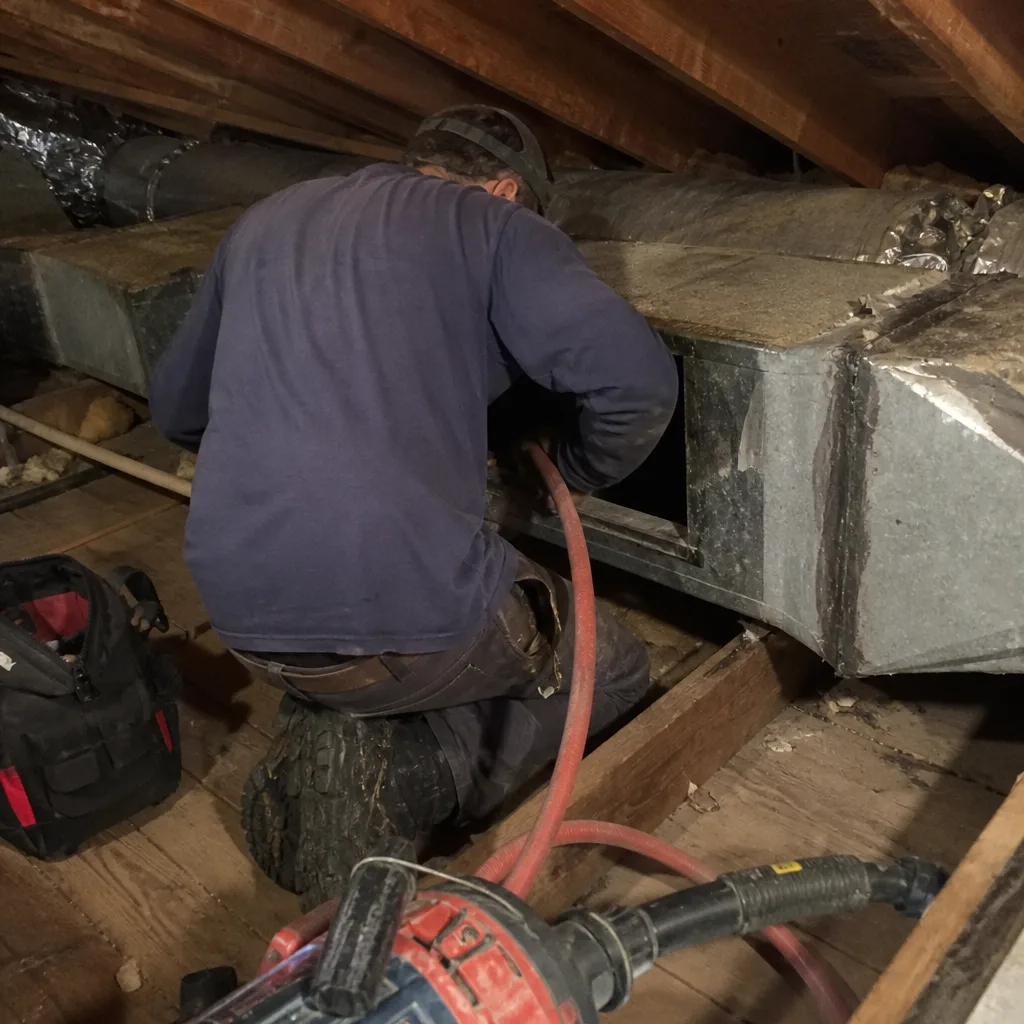 Before
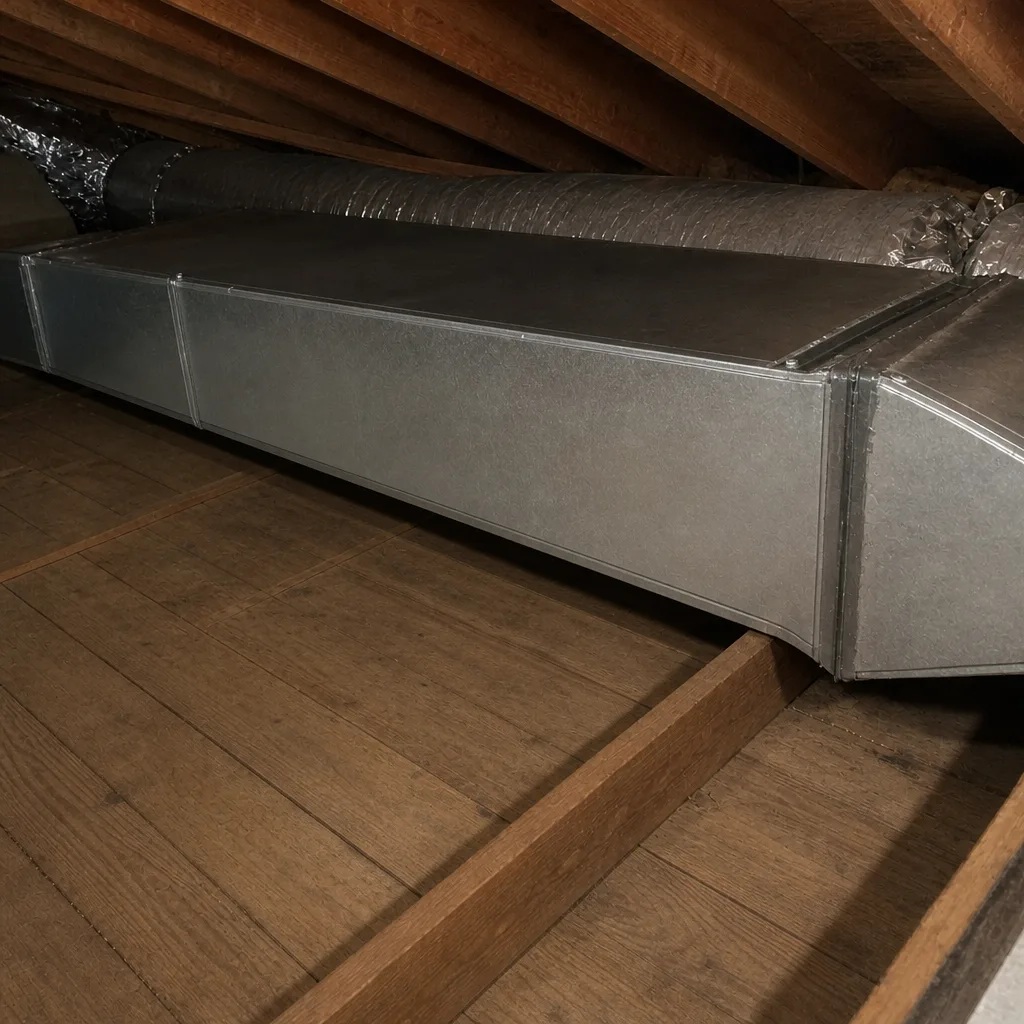 After
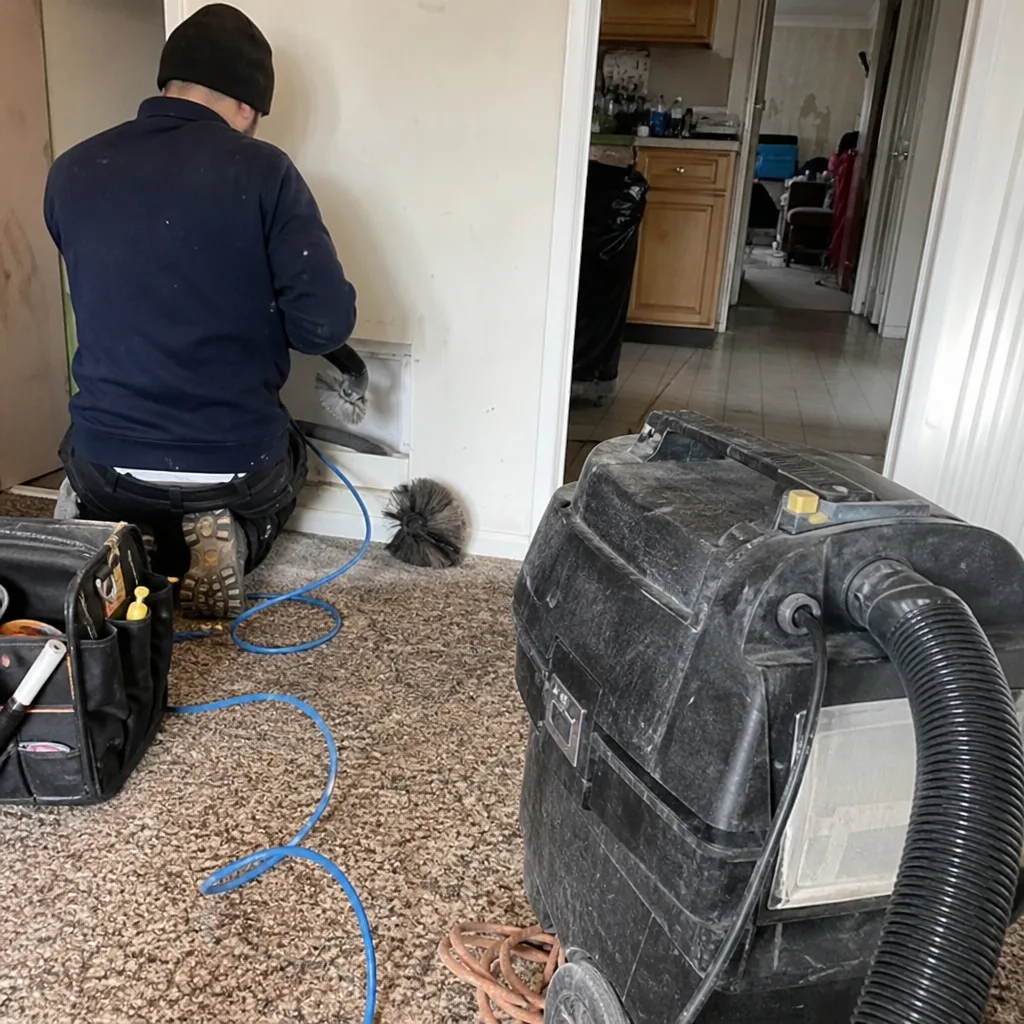 Before
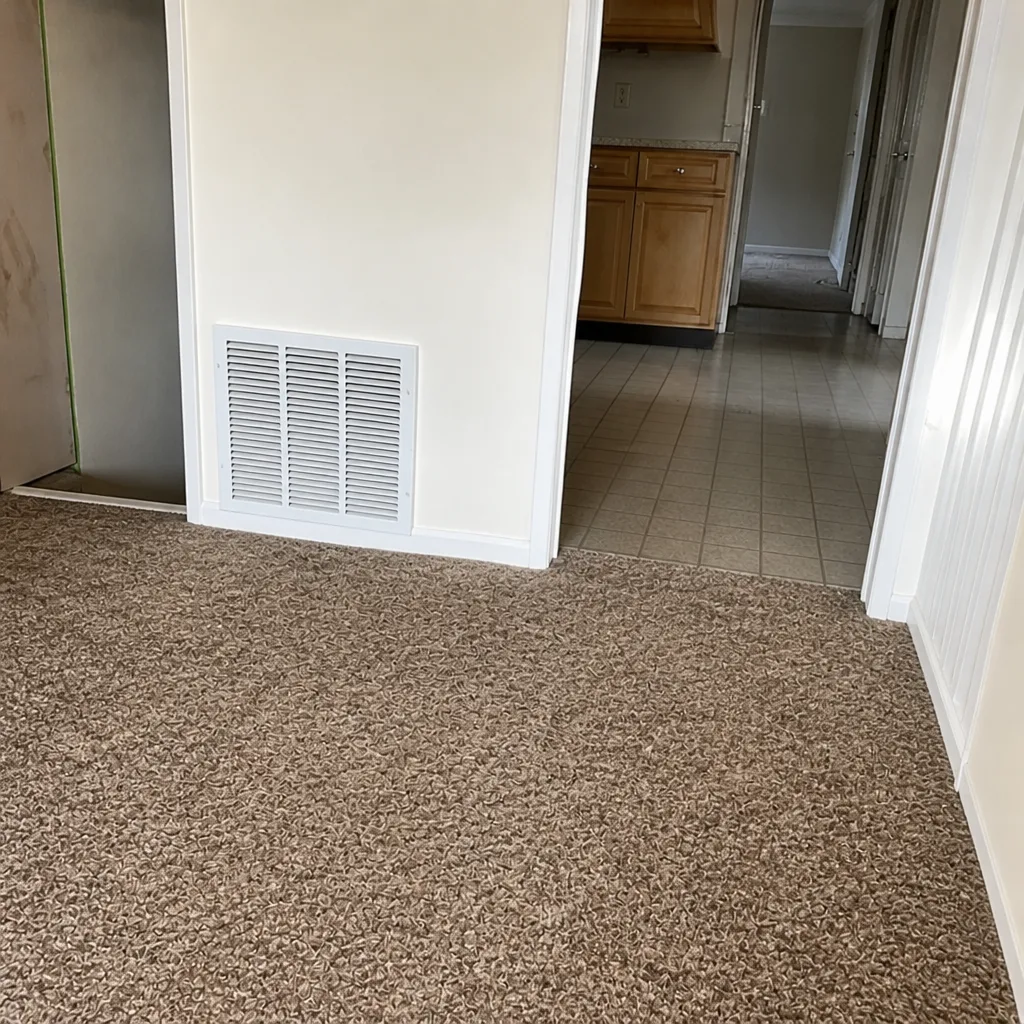 After
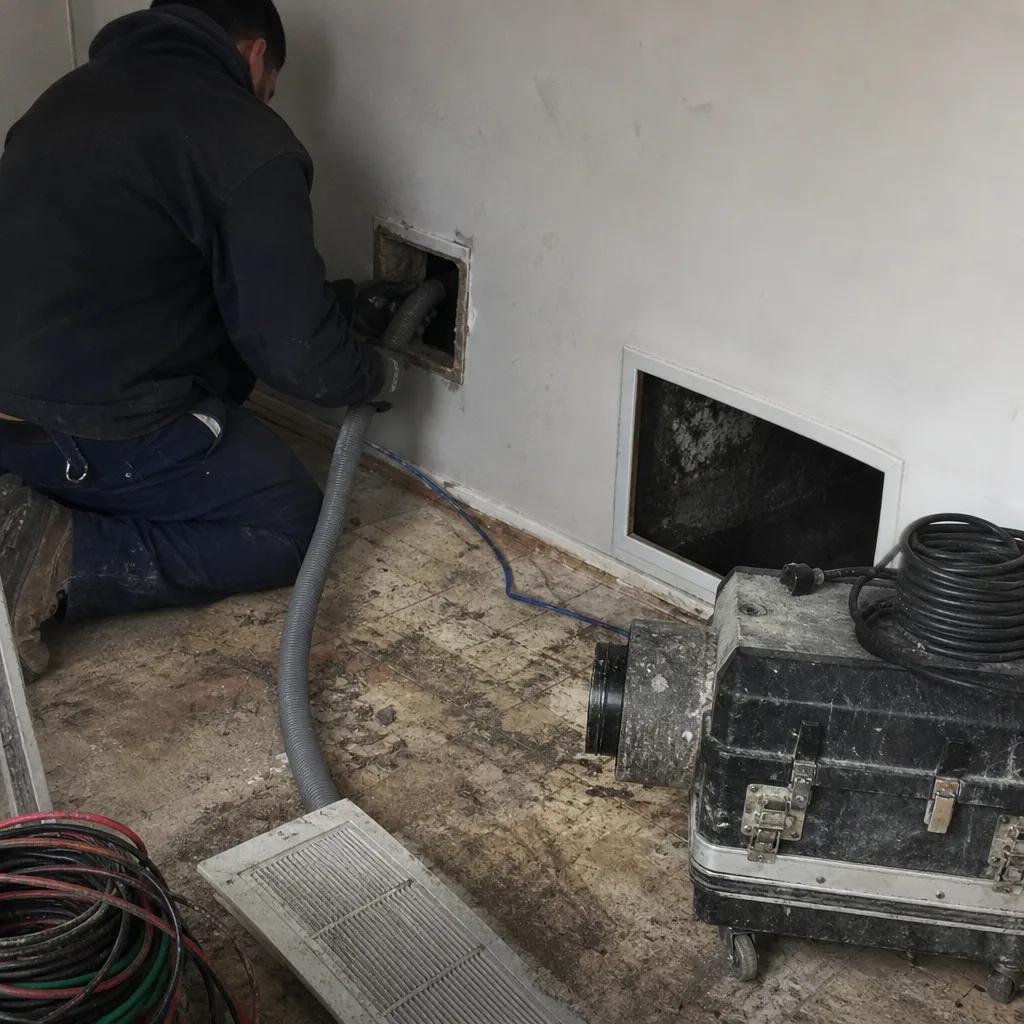 Before
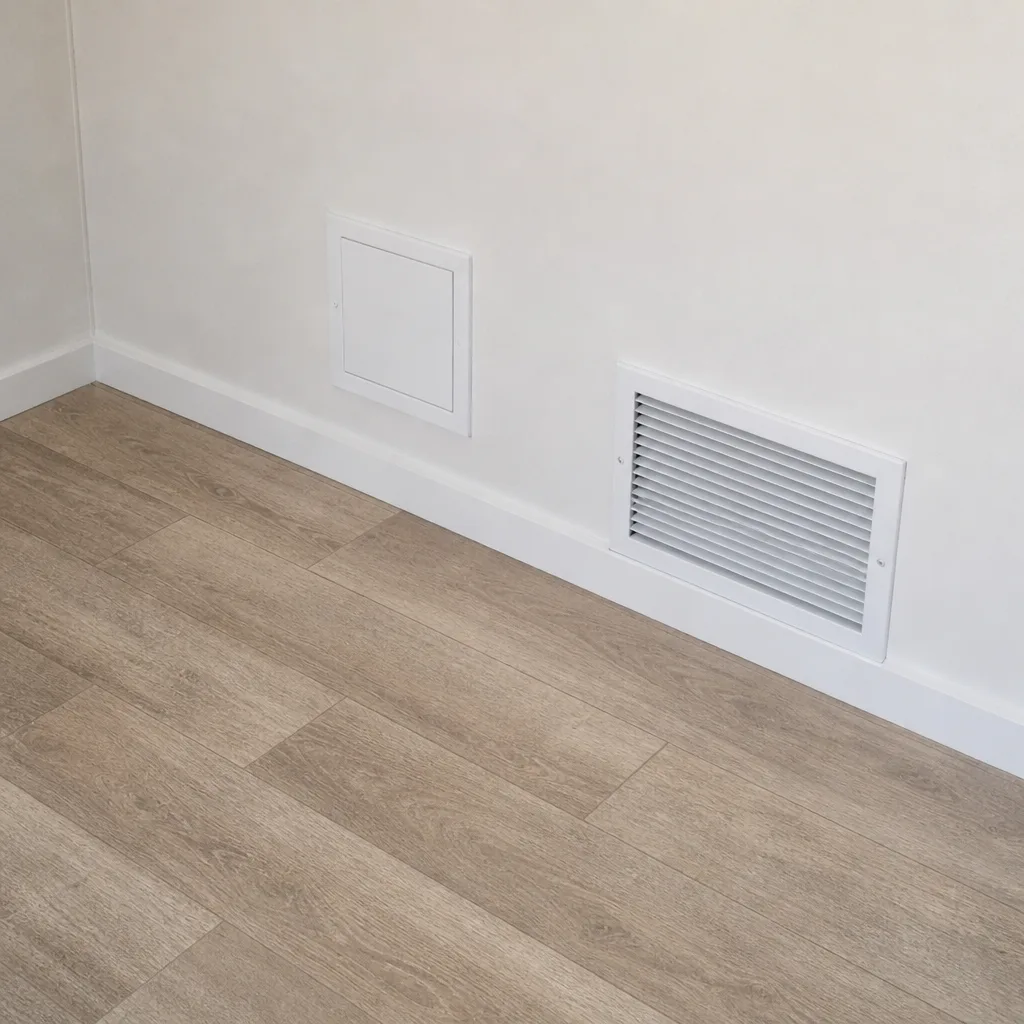 After
When to Call a Professional
If you’ve got visible debris inside the ducts, older rigid ductwork with leaks or disconnects, post-renovation dust, any musty odor that filter changes don’t fix, or evidence of moisture intrusion, that’s a professional assessment situation. The same is true if you’ve tried a DIY clean and the house got dustier afterward – the debris is still in the system and it needs to be extracted, not just agitated again. Air Duct Cleaning Mariners Harbor offers free estimates in Mariners Harbor – call (844) 625-7002. We answer 24/7, with fast dispatch from 7am to 7pm, Sunday through Friday. The local pro is licensed and insured as required, the price is set per job by a written estimate, and you’ll see before-and-after photos of your own ducts when the work is done. One flat price per system, agreed before we start.
Frequently Asked Questions
It depends on the home – square footage, number of returns, system age, and whether repair or sealing is needed all factor in. What we can commit to is that the price is one flat rate per system, set by a written estimate before any work starts, with no per-vent pricing. Call (844) 625-7002 for a free estimate – we’ll quote the job, not a teaser number.
Most very low advertised prices cover only register covers and the first section of duct, not the main trunk line. That’s the part a shop-vac can reach. The full system – the trunk lines, the returns, the plenum – is where the actual debris lives, and it’s often excluded. When you compare quotes, ask exactly what’s covered and whether the main trunk is included.
Ask for before-and-after photos of your own ducts. That’s the simplest, most objective verification, and any professional provider should offer it without being asked. We provide them as standard. If a provider can’t show you what they cleaned, that’s a reason to look elsewhere.
There’s no universal schedule, and anyone who tells you otherwise is guessing. Homes with pets, allergy sufferers, recent renovation dust, or heavy filter neglect typically need it more often than a low-traffic home with good filter habits. A reasonable approach is to inspect filters regularly and have the full system assessed every few years – not on a fixed commercial promise.
Only for surface tasks – register cleaning, filter replacement, and visual inspection. Once the inside of the duct system is involved, DIY is limited by equipment capacity, not effort. A shop-vac pulls 55 CFM; a professional system moves 2,000 to 4,000. That gap decides the outcome.
Yes, and this is the risk that catches people off guard. If you agitate settled debris without high-CFM extraction and negative-pressure containment behind it, the dust goes airborne in the living space and back into the HVAC return. In older Mariners Harbor homes with loose sediment in original rigid ductwork, this is the most likely outcome of a serious DIY attempt.
The Bottom Line
DIY duct cleaning is real for surface tasks, but most homeowners overestimate what a consumer vacuum and a brush kit can do inside a duct system. The difference between a shop-vac and a professional negative-air machine isn’t skill – it’s a 55-CFM vs 2,000-to-4,000-CFM physics gap that no technique bridges. In Mariners Harbor’s older housing stock, the risk goes up because settled debris is more likely to go airborne when disturbed. Keep the DIY work at the register and filter level. Call in professional equipment for anything past that. The full scope – cleaning, repair, sealing, sanitizing – belongs in one visit, with one flat price agreed upfront and before-and-after photos when it’s done. Call (844) 625-7002 for a free estimate.
Written by the team at Air Duct Cleaning Mariners Harbor.